…In the Dead of Winter

Two of my sons came home for a visit the weekend after my birthday. One carried a florist’s bouquet. As I pulled back the delicate tissue paper and lavender satin Flowersribbon, I seemed to hear Patricia Neal’s smoky voice. “Flowers,” she whispered. “In the dead of winter!”
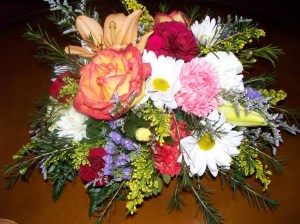
Amid smiles, hugs, and centering the fragrant blooms on our coffee table, Neal’s words lingered in my thoughts.  The movie was The Homecoming: A Christmas Story, a pilot for the old television show, The Waltons.  You remember — the Great Depression, a large family.  John-Boy.  When Olivia Walton (Neal’s character) receives the flowers, her sense of awe is tangible.  “Flowers,” she says.  “In the dead of winter.”

With those few words we understand Olivia.  Her rural poverty.  Her warmth and love of beauty.  Her wonder at the miracle of flowers growing in winter.   The words anchor her in a different time and place, a time when folks couldn’t easily pick-up fresh floral bouquets year-round.

Other than a few blogs and articles, mostly I write historical fiction.   Reading it has taught me the need to ground my heroine in the time she lives.  I must make her era come alive through her thoughts, deeds, and dialogue.  What does she find wondrous?   What might she fear?   What does she believe?  How does all of that influence her words and actions?

It takes a light hand to do this.  No long rambling diatribes.  Just something simple.  Something like “Flowers. In the dead of winter.”

→If you write historical fiction, or any fiction set outside your own norm, what have you found helpful when creating your characters?  How do you sculpt them to make them appropriate for the time or place in which they live?
Glamour Girl

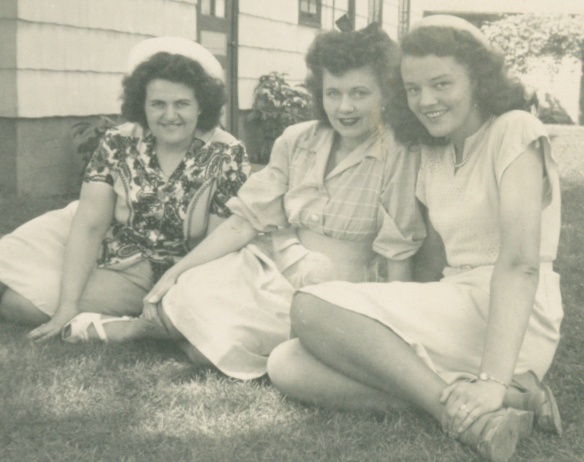
She was born in her grandmother’s cabin on the desolate plains of northern Minnesota.  Such a setting brought to her an intense longing for glamour and romance. She found it in novels, Hollywood movies, with friends and, for a time, in each of her marriages. mom-friends2

She lived in six states and visited many more. She traveled to Canada and to Germany, savoring the wonder of new sights, new places. There was always something beautiful to discover.

But she was also a mother.  Along the way, she gave birth to seven children. Her third child was a blue-eyed whirlwind described by many as all boy. When she was 32 (how young that seems now), a car accident took her son’s life. I doubt any mother ever recovers from a child’s death.  She didn’t.  Not totally.

Despite her loss she journeyed on, though perhaps with less spirit.  She found stability in raising her children, in keeping house, baking breads and pastries, reading. In selling Avon. How appropriate for her to turn to selling cosmetics and perfumes. She did well with it, earning honors and awards.  For nearly four decades, Avon helped her find the glamour and recognition she craved.

At some point I came to see that she never seemed to plan.  Although she worked hard, for her life simply happened.  The realization disturbed me.  It wasn’t my way.  But somehow things seemed to work out for her.

I spoke at her funeral.  It was only as I wrote out my words that I put shape to the thought that she had been the ultimate pantser.  She had lived her life by the seat of her pants, seemingly sliding from one event to the next. Making it up as she went.  Of course we writers know there’s something to be said for pantsers.

It’s been 18 months since she left us.  Today would have been her 81st birthday.

Happy birthday, Mom.  I love you.

Changes

I love seasons. They bring a natural change and order to life. Spring blossoms into verdant summer. Autumn gold fades to brown then gray and winter white. As the snow melts, new life springs forth again and renews the cycle.

writing-blog-0051Changes are a part of life but how often we resist them only to find ourselves bogged down in the mire of monotony.  A prime spot is in our personal lives.  Recently, taking a lesson from nature, I made a few changes in my life.  Small ones but, in subtle ways, they’re making a big difference.

My first change was something I don’t often do.  With my husband’s help, I re-arranged some furniture – our television, a table and lamp, a few chairs.  What a result!  It opened up the room making it feel larger, allowing us to see the windows in the next room.  Now, there’s a homier feel when we sit there.  Who would have thought?

Early Saturday evening, we’ve started turning off the lamps and TV. We light writing-blog-0122some candles and, seated together in our rearranged family room, we listen to Garrison Keillor and guests on A Prairie Home Companion, an old time radio favorite. For a few hours we relax in a different time with the only commercials aired of the Powdermilk Biscuit variety.

I’ve made other changes, little ones.   I’m cutting back on coffee, and sampling varieties of tea instead.  Because of this, I’ve discovered the refreshing flavor of Bigelow’s Earl Gray.  I’m also trying various brands of chocolate.  Ghiardelli is now a favorite.   And finally, I’m dedicating one hour a week to creating a new character or a new story – something not part of my current wip.   This simple exercise helps stimulate the mind.

→What changes are you making in your life in this still fresh New Year?  What changes would you like to make?  Big or small, change can invigorate the soul.  Try it.

Preparing for Christmas

We bought our Christmas wreath today. We’ve had an artificial tree for nearly two decades, but each year Christmas Wreathwe drive up to a tree farm at the base of the Pocono Mountains to buy a real wreath. Oh, I love the piney smell that oozes from a real tree indoors. A wreath hanging outside in the cold doesn’t give off such a scent. But that’s how things have developed in our home. We trim a fake tree hauled up from the basement, and hang a real wreath hauled down from the Poconos. It’s now a tradition.
This year’s wreath is smaller than last year’s. Most everything about this year’s Christmas will likely be smaller. No matter what a person’s income, it has become impossible for anyone to ignore the country’s current economic condition. And who knows what 2009 might bring?

Across America, banks are foreclosing on houses. Factories and plants are closing their doors. Those still employed wonder – am I next? Layaway plans are making a comeback and frugal living blogs abound. Rampant worry over the publishing industry has published authors encouraging others to buy a book to give this Christmas. Hey, a book is a great gift anytime!

Our giving this year leans heavily toward the practical, and the personal. Our sons are now on their own. They’ll find useful gifts under the tree. For geographically scattered siblings, I’ve created a newsletter blog. For others, I’ll give gifts from my kitchen.

But how does this influence our writing? The industry has realized that we’re in a recession. Publishers are laying off employees and downsizing books. For aspiring authors, is it practical to maintain professional memberships? What about next year’s conferences? Can we hope to sell? But in the grand scheme, does it matter? Life, after all, is a cycle. Shouldn’t we simply keep writing?

And shouldn’t we rejoice in the spirit of the Christmas holiday? This year can again be a time of profound beauty, if we prepare.

Will the current state of the economy influence how you celebrate this year and, if so, how?

Why do we write?

Recently fellow WisRWA member Jody Allen shared an article from another RWA Chapter. The post originated on Murderati (an outstanding blog) and was written by Toni McGee Causey. She titled it Comfort Reading (Click here – now!). The article was so moving, I felt compelled to help spread its message. Perhaps you’ve already read it; if so, you’ll know it’s worth reading again.

madeline3 Causey’s post brought to mind my step-mother. She’d always worked hard. While still healthy, she’d never found much time to read for pleasure. Then, on one of my later visits, after she had been diagnosed with cancer and was worn down from chemo, I saw a stack of well-read Regency Romances next to her chair – many by Georgette Heyer and Barbara Cartland. As we talked about her love for the stories, her face softened. “They take me away,” she said. We shared a smile.

As fiction writers, we have many reasons to write. Some of us write for recognition. Some of us write for money (still waiting on that one). Some of us write simply to quell those nagging voices in our heads. But of all our reasons, I believe the best reason we have to write is for others.

Keep writing, my friends!

Candlelight

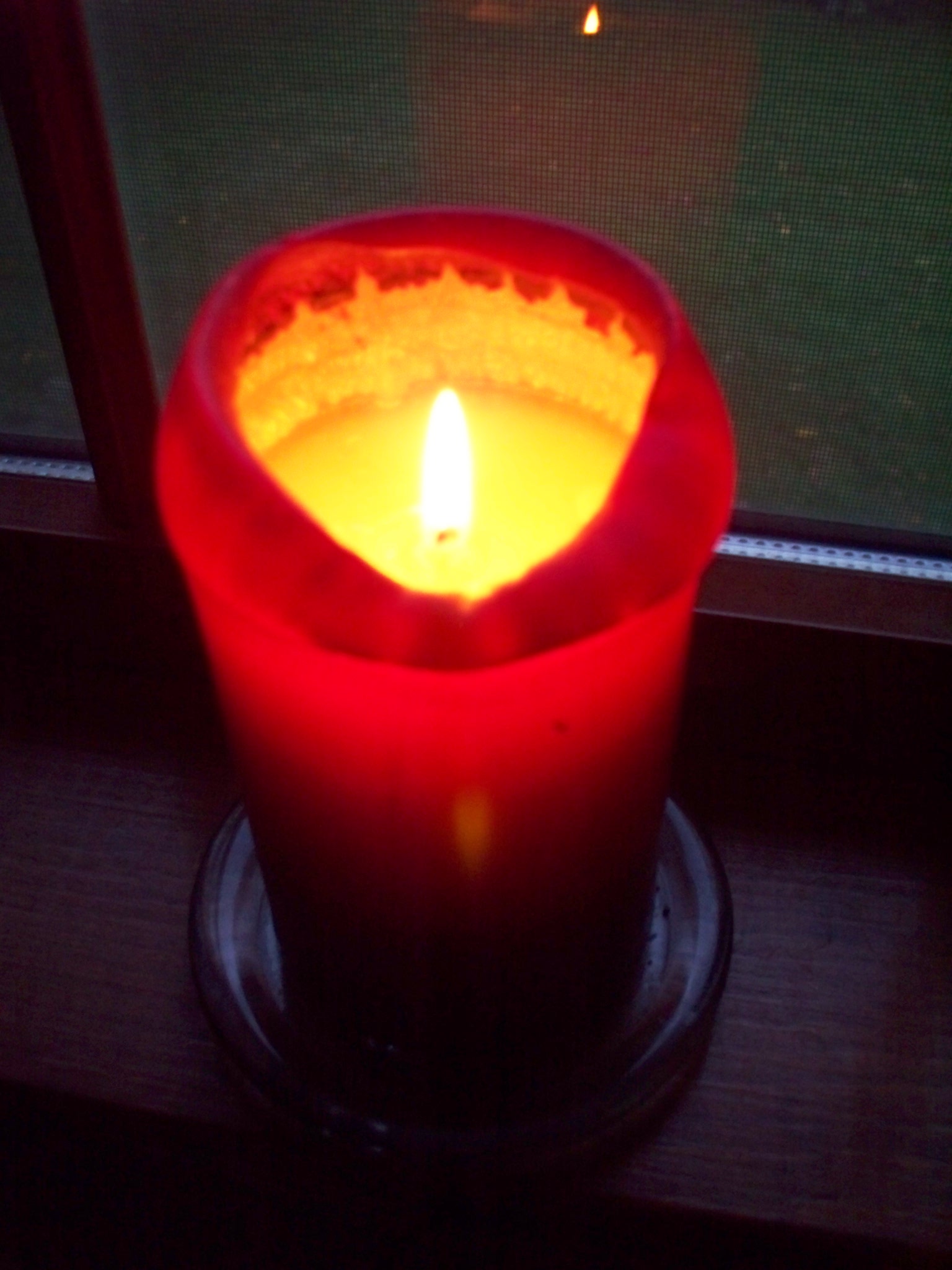
I write best by candlelight. Whether in the dark of night or in the early hours of the morning, there is something about the glow of the flame that inspires my soul.

Writing takes incredible focus. For me, the hardest part is finding that focus – sitting down and getting back into the story, blocking out all sounds, all sources of distraction. Returning mentally to the 19th century. Once I’m there, I can write. It’s getting there that’s hard.

The flame helps.

Do you have some object that helps you take off and soar with your writing? Maybe you have a favorite chair or some seen-better-days sweats. Perhaps you have an angel muse perched nearby. Or maybe you find the sweet sound of music brings inspiration. I’d love to hear about what works for you.

Happy writing to all.

Sunnyside

Magic dwells in Tarrytown – magic, mirth, and a smidgeon of mystery.

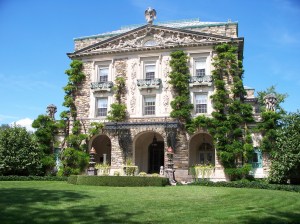
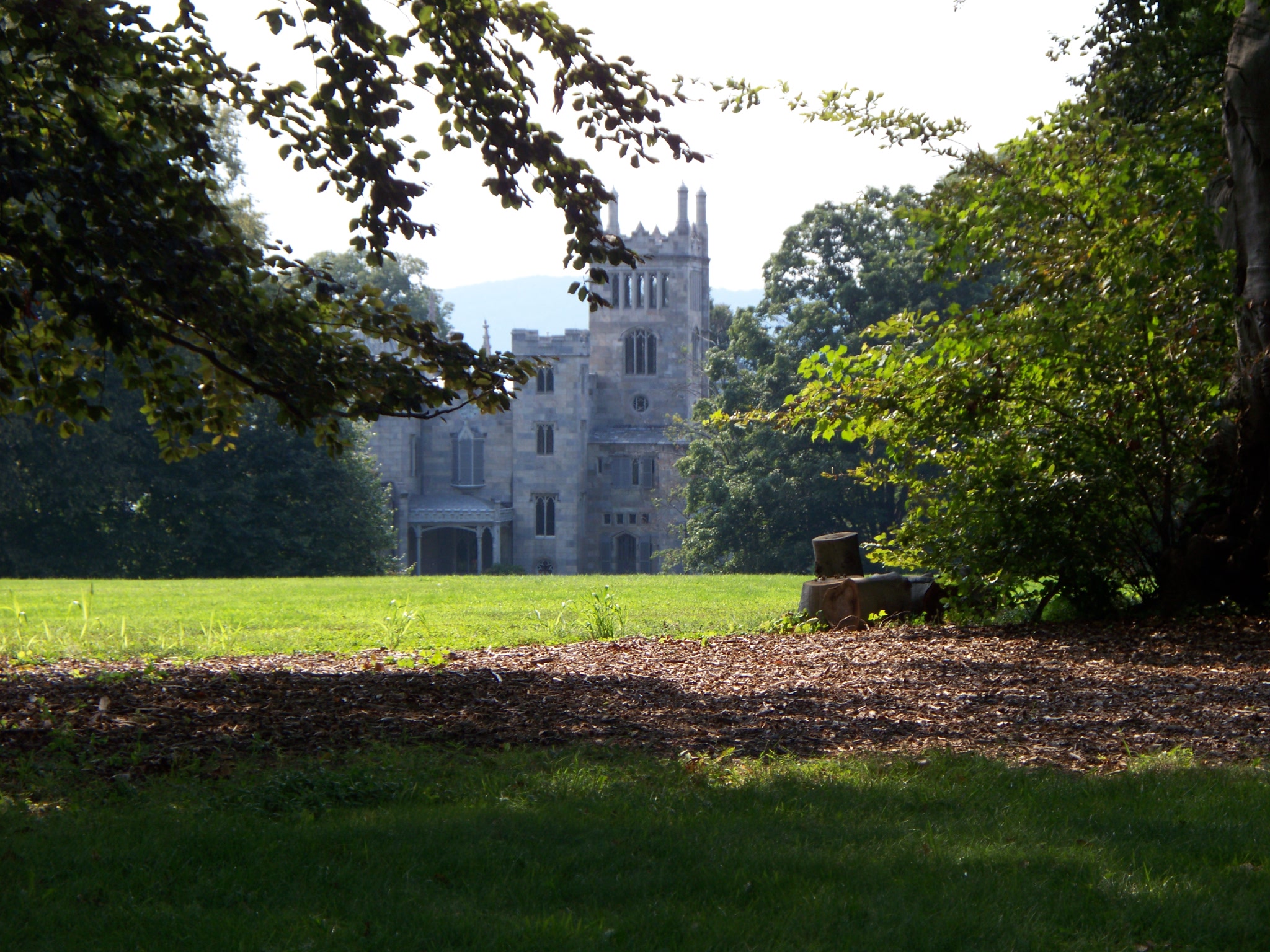
On the banks of the Hudson River stands a house called Sunnyside. Sunnyside is not a grand house, like neighboring Lyndhurst (see photo on right). Lyndhurst is a castle of a house, an outstanding example of American Gothic Revival architecture built by a man of substance and made grander still by those who came after.

Nor is Sunnyside a house that prompts thoughts of great wealth like Kykuit (see photo on left), the home a few miles up the road that oil tycoon John D. Rockefeller carved from a mountain top. His grandson, Nelson Rockefeller, filled the six-story mansion with modern art inside and out – Picassos and the like – before the family left the home to the National Trust.
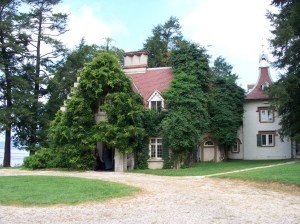
Sunnyside is, instead, a humble, fairy tale sort of house.

In 1835, after an adventurous life in America and abroad, noted author Washington Irving bought a simple two-room Dutch cabin, built in 1656, and some acres of land surrounding it. His idea, he wrote, was to “make a little nookery somewhat in the Dutch style, quaint, but unpretending. It will be of stone.” And thus, Sunnyside was born.
Irving’s young fiancé had died of consumption and he never married. In his later years he lived at Sunnyside with his widowed brother and five nieces. He was a genial, hugely popular man who entertained renowned literary figures and United States Presidents alike within the walls of his humble cottage.

What is it that causes one house to stand apart from its neighbors?

Is it the stone, wood, and skill that creates the structure? Is it simply the setting? Or does some spiritual remnant of those who have lived within linger to bid us welcome?

Things I Learned in San Francisco – RWA National

As you may have guessed by previous postings, I LOVED touring San Francisco and my experience at 2008 RWA National. Here are a few things I learned while there.

  • Chinese take-out tastes a whole lot better in California than it does in Pennsylvania.
  • All major cities are NOT alike.
  • San Francisco’s culture is unique, undefinable, and exhilarating.
  • The temperature of a city does make a difference. To me, San Francisco’s is heaven on earth.
  • When going to a conference, check in early (but try to avoid those pesky power outages).
  • A hotel lobby filled with women’s voices is very loud.
  • Quiet spaces are available, even in a hotel filled with 2,000 women (and a few men) in a city the size of San Francisco.
  • Every conference has a different mood.
  • The San Francisco Marriott has the best staff I have ever encountered in a conference hotel.
  • Conference lunches may taste the same everywhere, but extraordinary service, good company, and a great speaker can make you actually enjoy the chicken dish.
  • Late night and early morning talks are the best.
  • Networking is little more than talking and listening to other professionals – a whole lot of listening.
  • An author’s name is her brand (thank you, MH!).
  • Opportunities for success don’t come around that often. When they do, be ready.
  • Holding your published book takes persistence and raw grit, but if you want it and are willing to work for it, it will happen.
  • Getting published is only the beginning.

and finally

  • While it may true that there is no place like homeI left my heart in San Francisco

What did you learn at RWA National, or at the last conference you attended?

Scribbles and Images

I changed my laptop wallpaper a few days ago. In the process I made a small discovery.

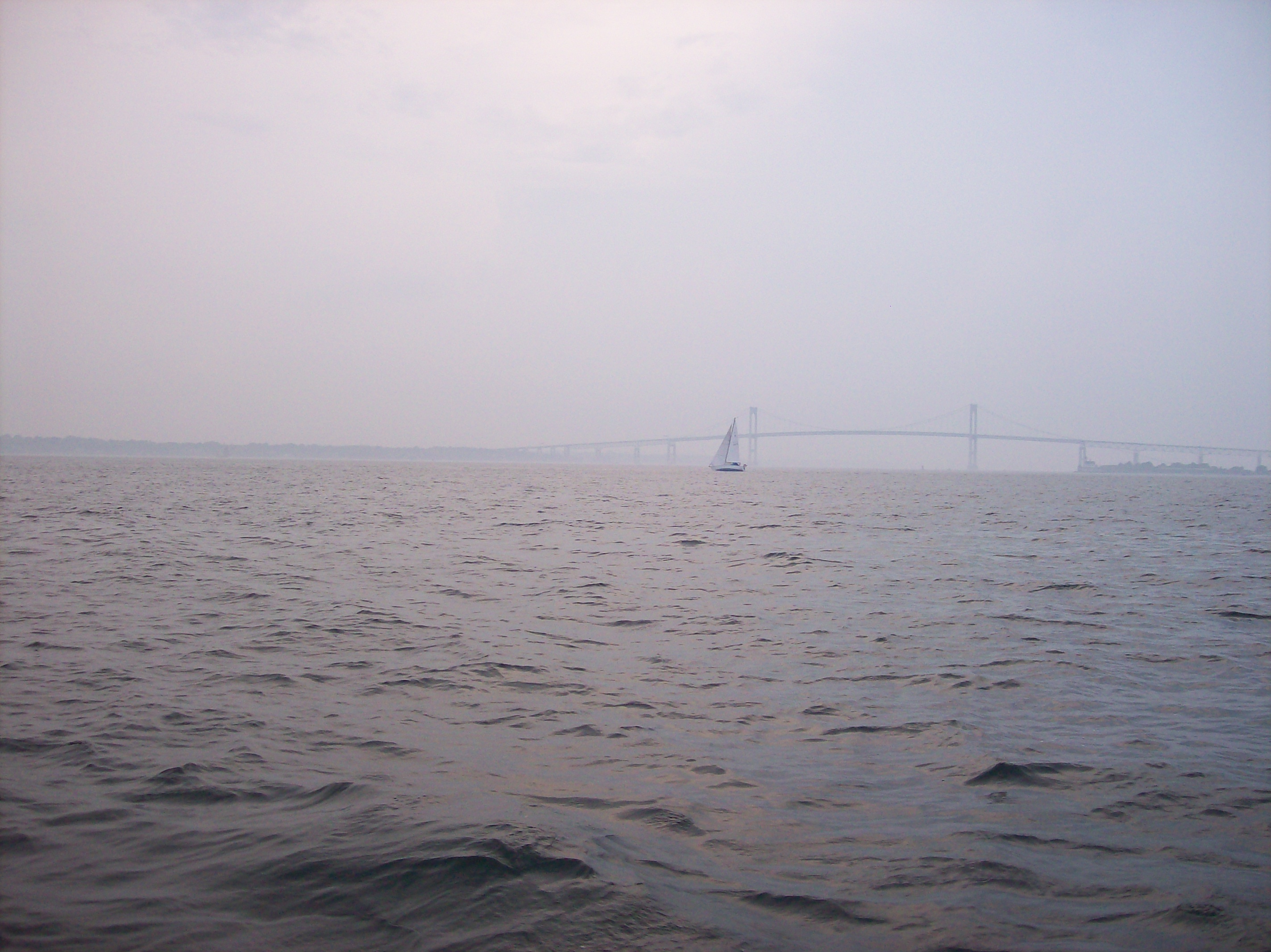
Last year we drove up to Rhode Island to see the Newport Mansions. On our second day there, my husband suggested a sail on the Narragansett Bay. That’s where I shot this picture, the one I placed on my wallpaper.

…..a sunset cruise, a small sailboat…sky graying with impending rain. The boat’s motor pulls us from the wharf. Beyond the Tall Ships, the Captain unfurls sails and his boat skims the water. Mist touches our cheeks and our lips taste of salt. We do not speak as his craggy New England voice spins stories. As we near the ocean the distant sky darkens. Thunder booms from afar. The Captain frowns…checks the radar once, twice. Lightening flashes, a spectacular sight that will remain forever distant as we turn about….

I hoard pictures, more so now that we’ve gone digital. I also collect scribblings. Buried somewhere in my files are notes about a creepy laugh overheard at a restaurant, and the feel of the air just before a tornado touched down mere blocks from our home. So many images. So many scribbles.

So what is my discovery? Mainly that these images are more vivid and enduring because they are preserved. They prompt otherwise lost memories and let them slip into our stories. Such tiny details help to enrich, to make our books come alive.

Many writers collect such scribblings and images. Do you find yourself using them in your writing? And, how do you keep them organized?

Farewell, George Carlin

My sister called this morning. She left me a voice mail. George Carlin died yesterday.

I remember taking her and our cousin to Milwaukee’s Summerfest in 1972. My beloved was overseas then, our marriage many months in the future. I was a few years younger than our sons are now. My sister and cousin were younger still, in their early teens.

Summerfest was also in its youth. Not much funding yet. For seating they’d set round logs and railroad ties on the ground. As night fell we walked through the crowd, trying not to stumble over the primitive seats and those sitting on them.

George Carlin - 1972

Floodlights lit the stage where Carlin stood. Above the audience the lights danced with swirling smoke. We could smell it. It wasn’t tobacco. I felt sort of embarrassed (what was I thinking?), and sort of proud (what WAS I thinking??) exposing my sister and cousin to this groovy happening. Not that I was ever much into groove, but parts were cool. Tie-dye, flowers, sand candles, strappy leather sandals, music, peace signs, and incense (also not the cause of the heavy, fragrant air).

Then from the stage George Carlin started speaking his now infamous seven dirty words. I couldn’t hear it all…so many people…so much noise. But we were there, witnessing an event that would stay with us.

Here’s a link to an article in today’s Milwaukee Journal Sentinal, a thoughtful piece, written well by Dave Tianen — Carlin Never Mellowed With Age. It includes pictures from that famous night in 1972. I’m posting it especially for my sister, my cousin, and for my sons, too — so that they might know one more thing about their mother.

Rest in peace, GC.

Now, back to the book.