On the 18th of April…

A happy marriage is a long conversation that always seems too short.                                                                                                          André Maurois

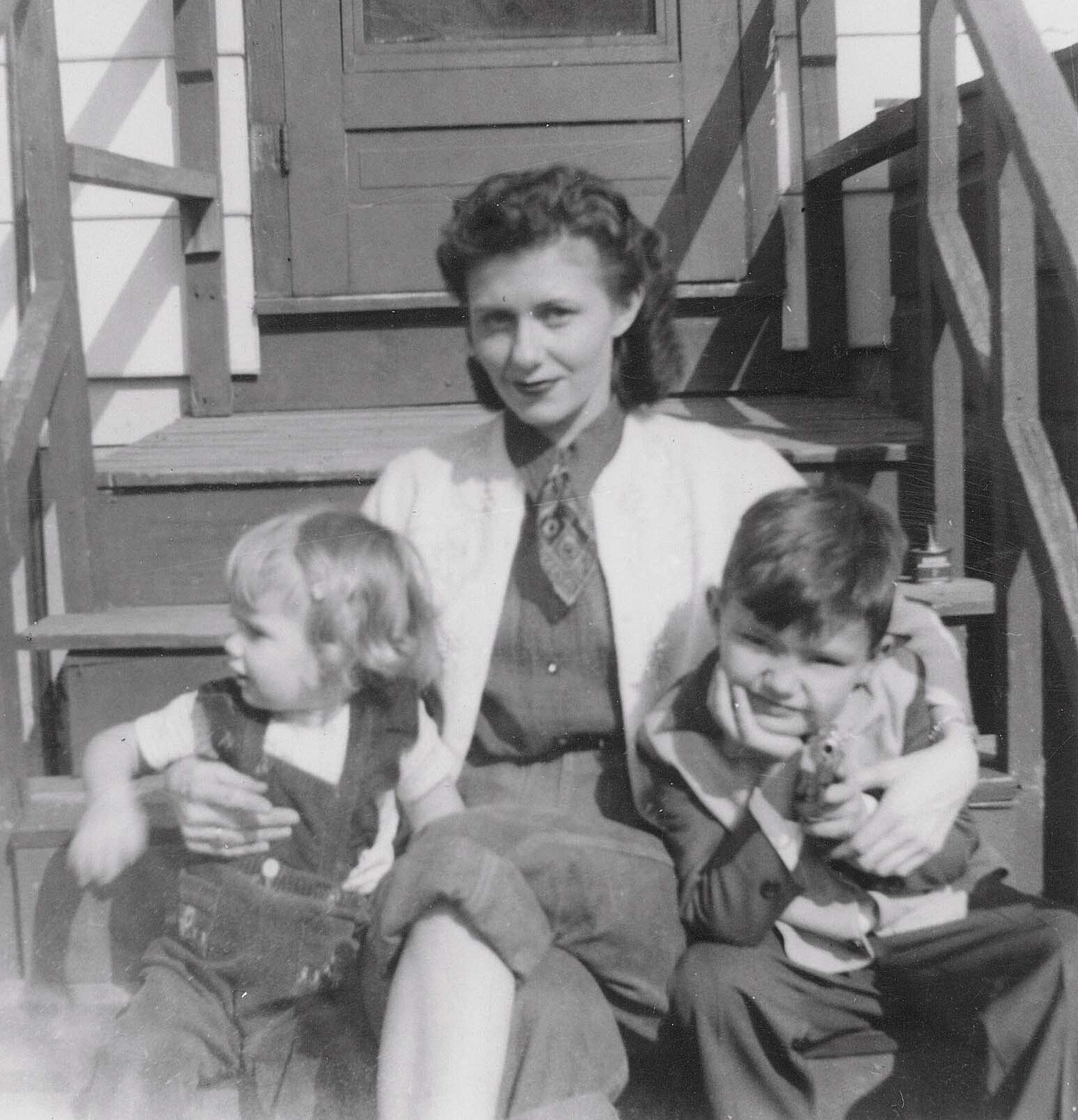
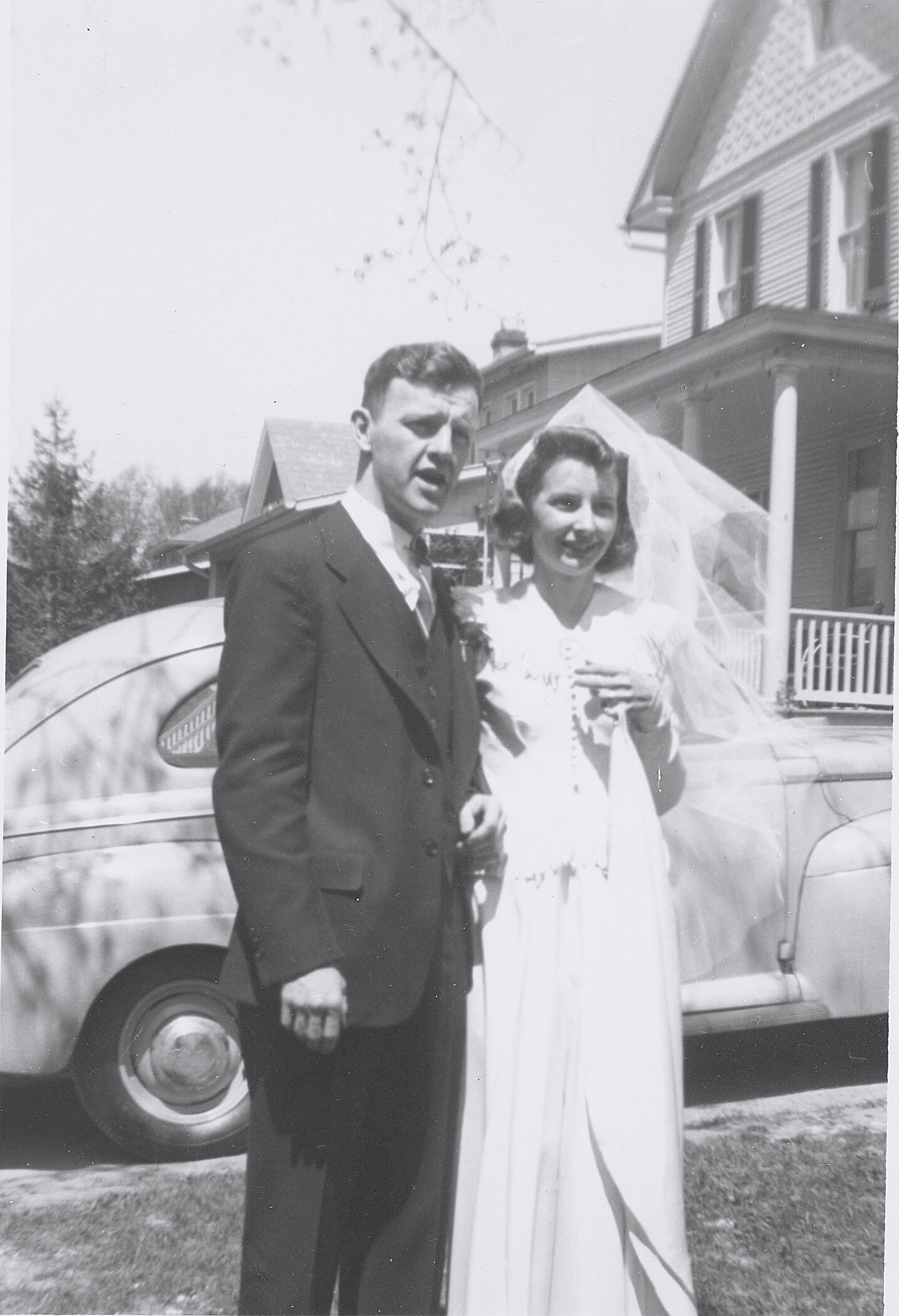
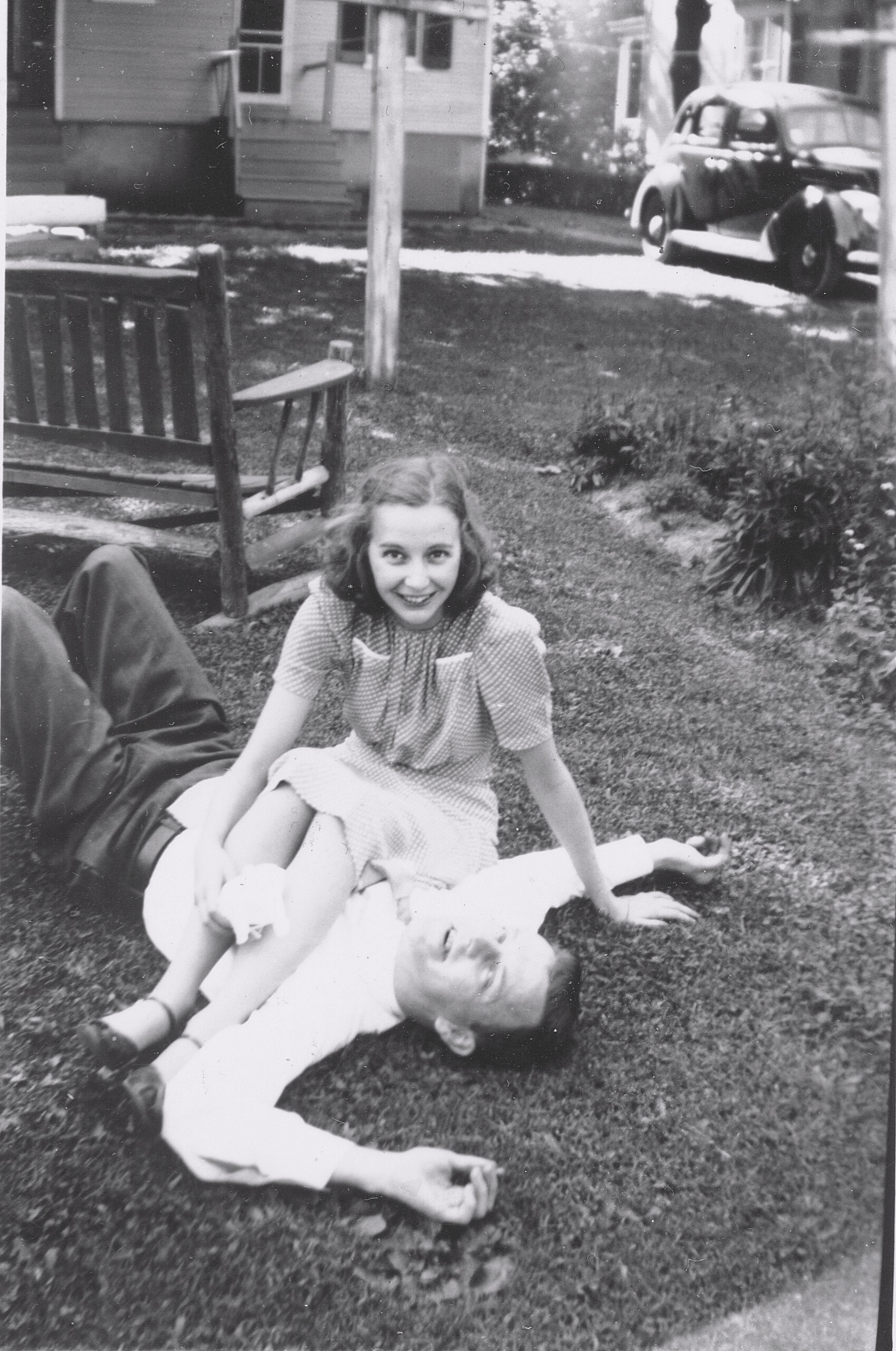
They were married on April 18, 1942.  The United States had been at war since December and he would soon be called to serve as a Naval Officer aboard the U.S.S. Lexington.  During his time in the Pacific he exchanged long letters with his family and with her, the love of his life.  After the war and his return home they settled into suburban life and raised their growing family — two boys, three girls.  He was a Chemical Engineer who loved history and she was a meticulous homemaker and volunteer.  Both remained devoted to church, to family, and to each other.  It was a good marriage, a happy marriage, one with conversations that always seemed too short.
As writers, even as romance writers, we seldom write of marriages such as theirs. Exciting, passion-filled stories are all about conflict that show a struggle between two souls —  man against man, man against nature, or even man against himself.  Perhaps because life is filled with struggle, we long to read about it.  It is the struggle, the conflict that keeps us turning the pages.  What happens next?  How will they possibly resolve this insurmountable problem?

So we fill our stories with conflict.  If she’s a liberal reporter, he’s a conservative landowner.  If she’s a born and bred Texas rancher, he’s a NYC lawyer come South to stir up trouble.  If she’s the daughter of a Saxon King, then he’s a Norman knight granted her father’s castle, and perhaps her, by right of conquest.
Conflict isn’t only created by who the characters are.  It can also develop naturally through the setting.  Several years ago I heard film critic Roger Ebert discuss the amazing popularity of “fish out of water” stories.  At that time, I was reading a lot of time travel stories in which a modern heroine traveled back to an earlier time.  I started analyzing these and other popular stories. Plop a person down in a strange new world and there is instant conflict as she struggles against the unknown.  The story is not in heroine’s undying love for the hero, but in the conflict she must work through to attain that love.

Once the story’s conflict is resolved, the story is over.   The genre doesn’t matter.  Literary fiction ends with a resolution of problems, happy or sad.  Thrillers and mysteries end with the bad guy’s capture.  Romance ends with the concept of And they lived happily ever after.

What of my history-loving naval hero and his happy bride?   Their story endures in the memories and lives of their descendants.  Tomorrow would be their day.

Happy Anniversary, Tom & Betty!  ∞

An Evening with Garrison Keillor

I’m a Garrison Keillor groupie.  So when my youngest son invited me to attend An Evening with Garrison Keillor last Wednesday at the State Theater, I didn’t scream “Yes! Yes! Yes!” with raised and shaking fists as an ordinary wild-eyed groupie might. Instead my soft “I’d love to, dear. How nice of you to ask.  But are you sure…?” was accompanied only by the rapid thumpety-thump of my heart.  As the Midwestern born and bred daughter of Minnesota Lutherans, it was the only response possible.  A Keilloresque response.

My husband first drew me into the magic of Garrison Keillor’s A Prairie Home Companion radio program when we lived in southern Indiana.  In those days we had only one car, a bronze Chevy Malibu wagon.  No air conditioning, but it had a decent radio.  One evening we came home with the Malibu’s rear filled with bags of groceries, a few pairs of new shoes, and some rambunctious little boys to wear them.  The late spring air hung warm and moist as the car radio broadcast NPR live from St. Paul, Minnesota.  We pulled into the driveway and stopped the car. No one moved to get out, not even our young sons. Instead we sat enchanted by Keillor’s hypnotic voice spinning a tale about the people in Lake Wobegon, “the little town that time forgot and the decades cannot improve.”

Through the years, on long road trips we brought along audio tapes of missed programs, Old Sweet Songs, and even How to Talk Minnesotan.

We’ve seen several live Prairie Home Companion performances.  The first was in Philadelphia.  We still laugh about the bull’s horns and large purple cape Keillor donned, his Sons of Knute lodge attire.  We watched the Christmas progam in Bethlehem, enraptured with the sweet sounds of choir music.  Last summer, we traveled to Red Bank, NJ for his Summer Love Tour.  All were radio style variety shows packed with delightful blends of music and commercials for Powder Milk biscuits, with GK and guests performing skits as Guy Noir, Private Eye and cowboys, Dusty and Lefty.  All complete with radio sound effects, of course.

Wednesday evening was different. It was simply An Evening with Garrison Keillor.  Alone.  Just Keillor and the sold-out State Theater audience.  He took us with on a road trip he and his family made when he was 12. Parents and the six kids, Garrison in the middle, driving to Yellowstone.  Somewhere in North Dakota, he became stranded in a gas station. He waited three days for his parents to return, guests of the gas station owners who lived in a tiny trailer and chain-smoked Camels and drank smelly beer.  Thus began his writer’s journey.

From then on, he told us, he wanted to be a writer.  So he went to college and majored in English.  He planned to write the great American novel but, as an English major, he discovered it had already been written. 🙂

Throughout his nearly two-hour performance (no breaks) we listened as story followed story then found its way home. One love affair unveiled another. Audience laughter shook the ceiling.  Listening, laughing, loving the experience, I thought of Mark Twain and how he, too, once shared his gift of spinning yarns in packed theaters.  Brilliant storytellers, the pair.

An amazing evening crowned by a long rambling side-trip back to the much beloved Lake Wobegon where “all the women are strong, all the men are good-looking, and all the children are above average.”

Thank you, my son!


Worry-Wart

“Worry often gives a small thing a big shadow.” ~ Swedish Proverb

I’m a worrier. I guess I always have been but I don’t think I realized it until a few years ago.

On a visit to Wisconsin, my siblings and I sat talking around the kitchen table one evening when I said something, although just now I can’t quite recall what.  I do remember that, after the chuckles subsided, my older brother said “Well, Deb always has been a worry-wart.”

A hundred-watt bulb lit up over my head. He was right, of course.  (Big brother is nearly always right.) So strange that I never realized the truth of his words until then.  I guess I figured everyone worried about their kids staying out late, and about loved ones driving in bad weather.  Didn’t everyone wonder if they’d turned off the stove before leaving home?  Didn’t everyone fret whether they’d locked the door, and shut the upstairs window?  In the mall parking lot, did I lock the car, or not?  Did I remember to charge my cell phone before I left on a road trip?  Did I bring the car charger?

I’ve generally kept my worry-wart nature hidden.  Few people know about it, except those closest to me.  Oh, and maybe the neighbors who observe my frequent returns to re-check the front door.  And now, those of you who are reading this post.

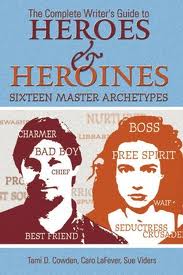
In her book, HEROES & HEROINES: Sixteen Master Archetypes, author Tami Cowden describes sixteen basic characteristics for heroes and heroines.  There isn’t a worrier among them.  None of my heroines have been worriers either.  I guess worry just isn’t a very heroic quality.

Still, I think it is a trait that might work well with a Nurturer – a mother who worries unduly.  Or a Waif who might worry about how she will find her next meal, even after she wins the lottery.  Or a Crusader who might worry over whether the greedy nuclear plant builders have built in enough safeguards.

Our heroes and heroines must be heroic but they must be real, too. Perfection creates boredom.  Heroes and heroines are more real when they have some inborn less-than-desirable quality to overcome.  Jealous, intolerant, greedy, vengeful, or lacking faith.  And one who, occasionally, worries.

I believe the reverse is true for villains.  Even Hannibal Lecter, among the most chillingly evil of villains, cared for and, in his own way, looked after Clarice.  I’d love to read about a villain who, in addition to his despicable nature, is also honest, caring, generous, or tolerant.  And yes, even one who worries. 

Domino Theory Revisited

“Dictators ride to and fro upon tigers which they dare not dismount.  And the tigers are getting hungry.” – Winston Churchill

The news was grim from Syria this week.  Dozens were killed, including two children, during security force clashes with protesters.  “We do not want your bread,” the people chanted in their marches. “We want dignity.”

Daily, the news continues from throughout the Middle East.  The reports, the photos, and videos are all similar in their horrible splendor.

In Egypt this week, after last month’s topple of 30-year President Mubarik, the police burned the Egyptian Interior Ministry building, a long-hated symbol of repression.  In Jordan, hundreds of Jordanians set up protest camps demanding broader freedoms and the ouster of the Prime Minister. In Yemen, white-collar professionals and students alike demanded the ouster of their President.  In Libya, multi-national government forces are are stepping in to protect the Libyan rebels from attacks by their own government’s troops.

Domino Theory updated

Throughout the Mideast protests and revolutions continue as more people in more countries step forth.  Spurred on by the internet, and by long-lived oppression, everyday folk are raising their fists and voices in defiance.  “We want dignity.”

In the mid-20th century, the United States government spoke often of the Domino Theory. This was the era of Communism and the Cold War. On news shows, in books, magazines, and news articles, reporters, writers, and talking heads speculated.  If one country fell to Communism, the next country would fall, then the next, and the next.  This Domino Theory was used to justify the war in South Vietnam and America’s intervention in other governments.  North Vietnam was a Communist country.  We could not allow South Vietnam to follow.

This year, the news from the Middle East has been volatile.  Tunisia, Egypt, Jordan, Yemen, Oman, Morocco, Libya, Kuwait, Syria . . . the dictators, like dominoes, are falling.  But they are not falling to Communism.  They are falling instead to the innate desire for free speech, and the freedom to live a more meaningful life.  It is a reverse sort of Domino Theory.

I write historical romance. I believe in the importance of studying history, and of happily-ever-after endings.  May the people who live in the lands surrounding the Mediterranean experience such an ending.  By raising their arms in protest they have already found dignity.  May they find freedom as well.

NJRW Chapter Meeting & Why I Belong

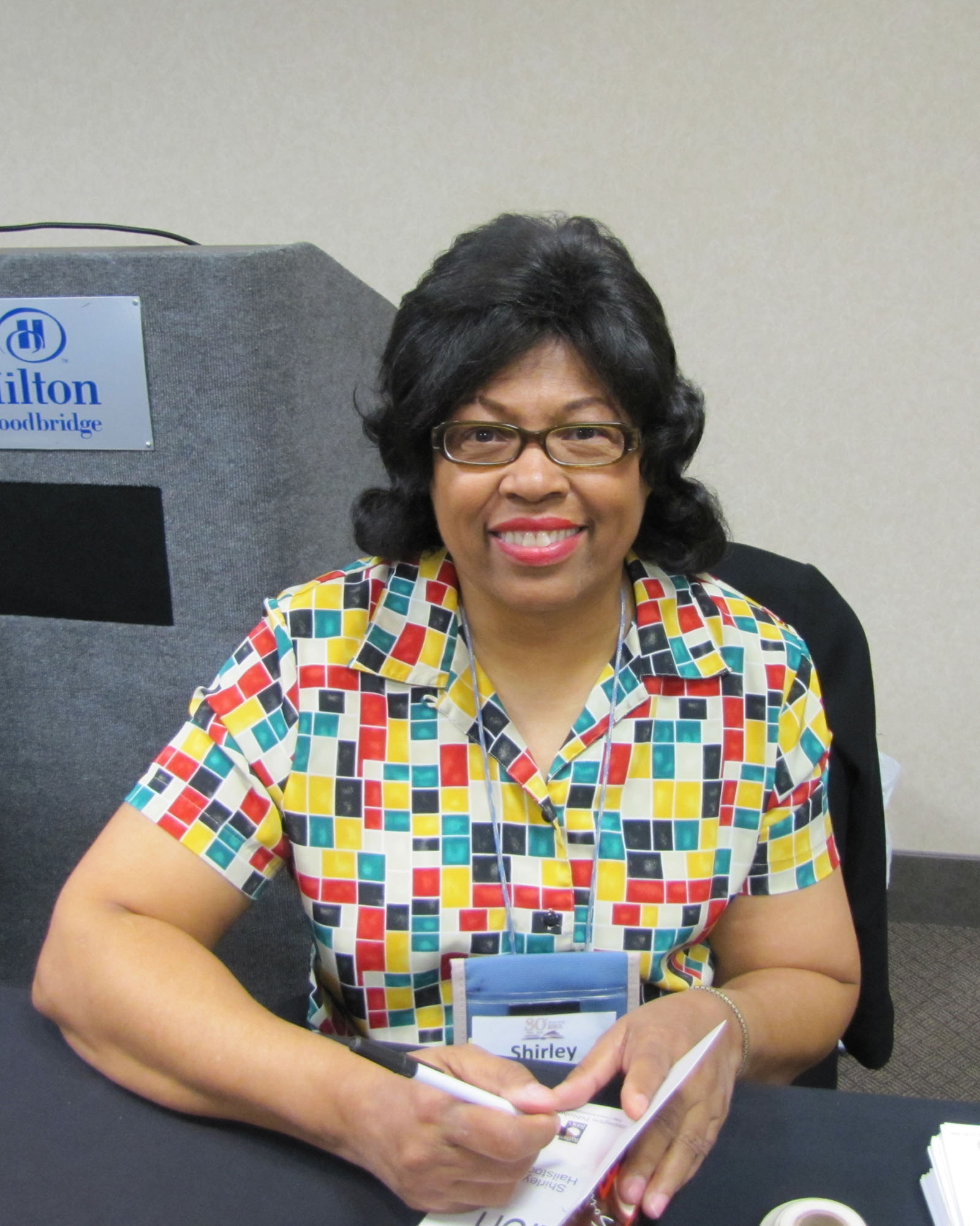
The New Jersey Romance Writers met Saturday, March 19, at the Hilton Woodbridge in Iselin, NJ. At the General Meeting, President Shirley Hailstock and NJRW’s Board updated members on the group’s finances, the new website, upcoming events including April’s Special Event, planning for October’s Put Your Heart in a Book conference, and the status of NJRW’s writing contests.  Hospitality Chair Val Luna handed out Hershey’s Kisses for those who submitted manuscripts since last month, Hershey’s Hugs for rejections, and a sprig of flowers for recipients of good news.  The Heartline Herald editor, Joan Raleigh, asked for member volunteers to write articles for the newsletter.  Volunteers are always needed and it is a great way to network.

Author Terri Brisbin

Member Kathye Thornton shared information about CTRWA’s upcoming Connecticut Fiction Fest 2011 on May 14 in North Haven, CT.  Keynote Speaker is Eloisa James.  Those attending will have the opportunity to pitch their books to acquiring editors and agents.  Noted authors will present workshops on a variety of topics.  All for only $99. Side note: I’ve learned Kathye has two how-to e-books (pdf) of interest – MS Word 2007 for Writers and also a guide for earlier Word versions.  Useful!

Member Terri Brisbin provided an update on NJRW’s exhibit at the NAIBA tradeshow to be held September 21-22 in Atlantic City.  NJRW will invite our published authors to man booths to sign their current releases and network independent booksellers.  The goal of our involvement is to promote the romance genre and provide information about local authors to the booksellers.

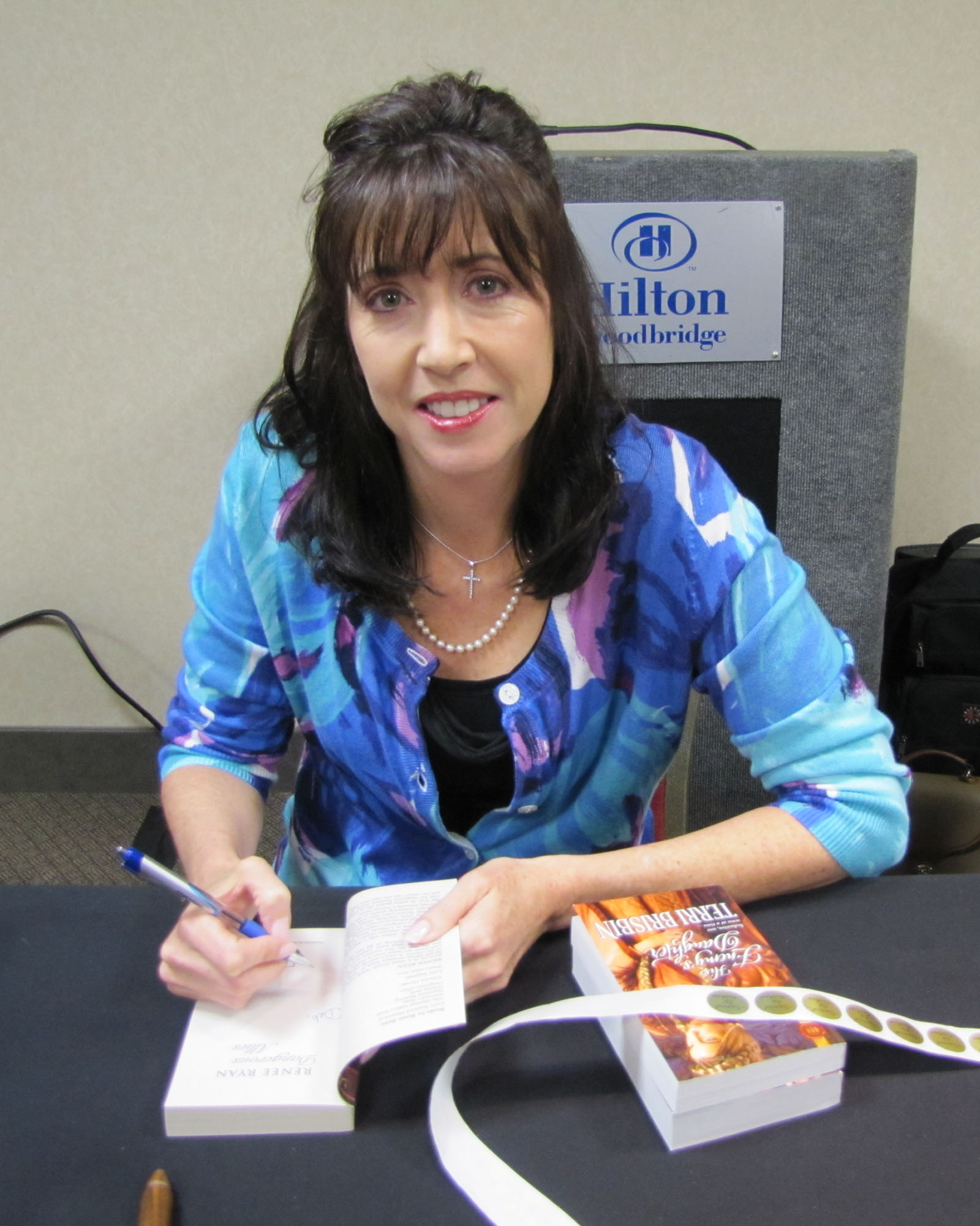
After the General Meeting and a short break, this months’ three featured authors presented their latest books then held a short book signing.  Included were Authors Terri Brisbin –  HIS ENEMY’S DAUGHTER, Shirley HailstockSOME LIKE THEM RICH, and Renee RyanDANGEROUS ALLIES.

Guest Speaker Renee Ryan

The monthly program featured author Renee Ryan who spoke on The Art of Layering: From First Draft to Final Manuscript. She began by stating that she received 187 rejection letters before selling her first book.  She kept them all.  She entered multiple contests and studied the craft of writing. After her first sale it would be nearly seven years before her next.  During that time she went back to studying craft and discovered the art of layering.  She said if we take away only one thing from her talk, we should remember “the one thing you control is your craft.”

Ms. Ryan discussed her eight-step process in layering.  Step One is to write a first draft.  After that, using examples from her work, she showed how to layer each scene with movement, senses, dialogue, emotion, and so on.  Layering makes the scene come alive.  It allows an author to show, not tell.  It allows for deep point of view letting the reader feel she is deep in the mind of the character.

NJRW President Shirley Hailstock

She also provided helpful tips, answering questions such as “What do I do if a scene isn’t working?” (Use highlighters to color code dialogue, emotion, etc.) and “How can I write what a tornado feels like if I’ve never been in one?”  (Watch You Tube!).

Sensational workshop, dynamic speaker!

News Flash…Renee Ryan chaired the RWA Workshop committee for RWA National in NYC this year.  Click here for the amazing line-up of workshops to be presented.

Following a pleasant lunch with our fellow writers down in the hotel’s restaurant, we went back upstairs where we broke into two groups. NJRW’s published authors met for a monthly Published Authors session.  President Shirley Hailstock led a useful Hands-On session for those not yet published.  Writers brought the first 250 words of their manuscripts for a fascinating and very helpful discussion about opening lines.

Simply one meeting, free and available monthly to members of NJRW.  One hand reaching forward, one hand reaching back – writers helping writers. It’s what RWA is all about.

Earthquakes & Flowers

We were parking our car in a Chinatown lot near the Philadelphia Convention Center when my sister called.  We had tickets for Springtime in Paris, the 2011 Philadelphia Flower Show. Paula’s voice held a note of urgency. She asked about our oldest son living in San Francisco, an untimely concern I thought.  We had not yet heard of Japan’s earthquake and the resulting tsunami reportedly headed toward the West Coast.

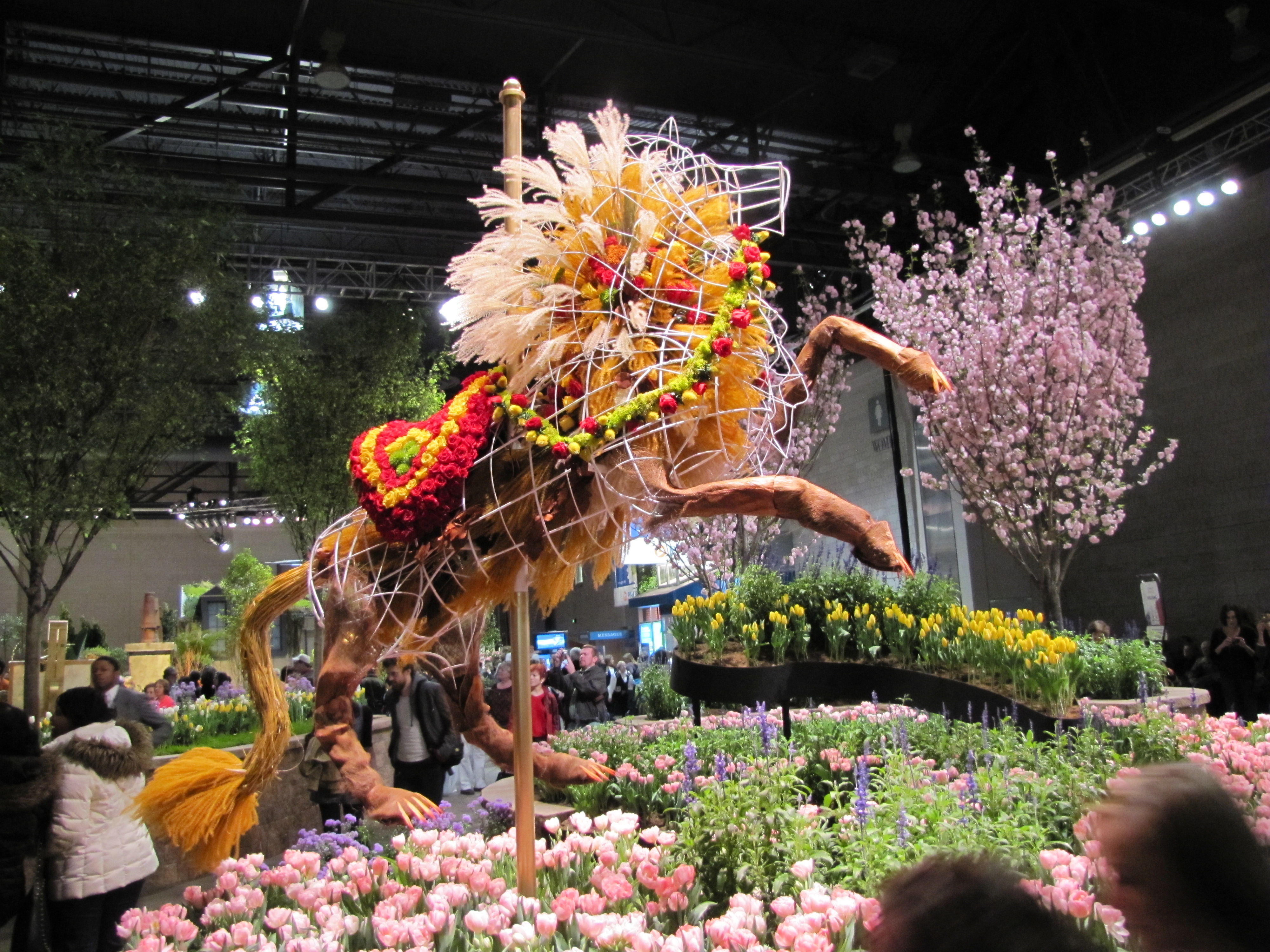
Walking into the flower show’s main gate seemed surreal. A possible tsunami was hours from San Francisco. The lines to the show were long and moved slowly. We could only wait. We entered under the arch of the Eiffel Tower, painted a light color against the black ceiling and awash with spotlights. Our son would return my call. Feathered and flowered carousel animals ran wild among blossoming cherry trees.  He would call soon; soon he did. Everywhere people stood in awe at the surrounding beauty. He and the rest of California were safe.

Surreal morphed into a vision, a landscape artist’s fantasy recreated inside the huge convention center. We strolled beyond the tower’s imposing structure and into a Parisian-inspired dreamland.

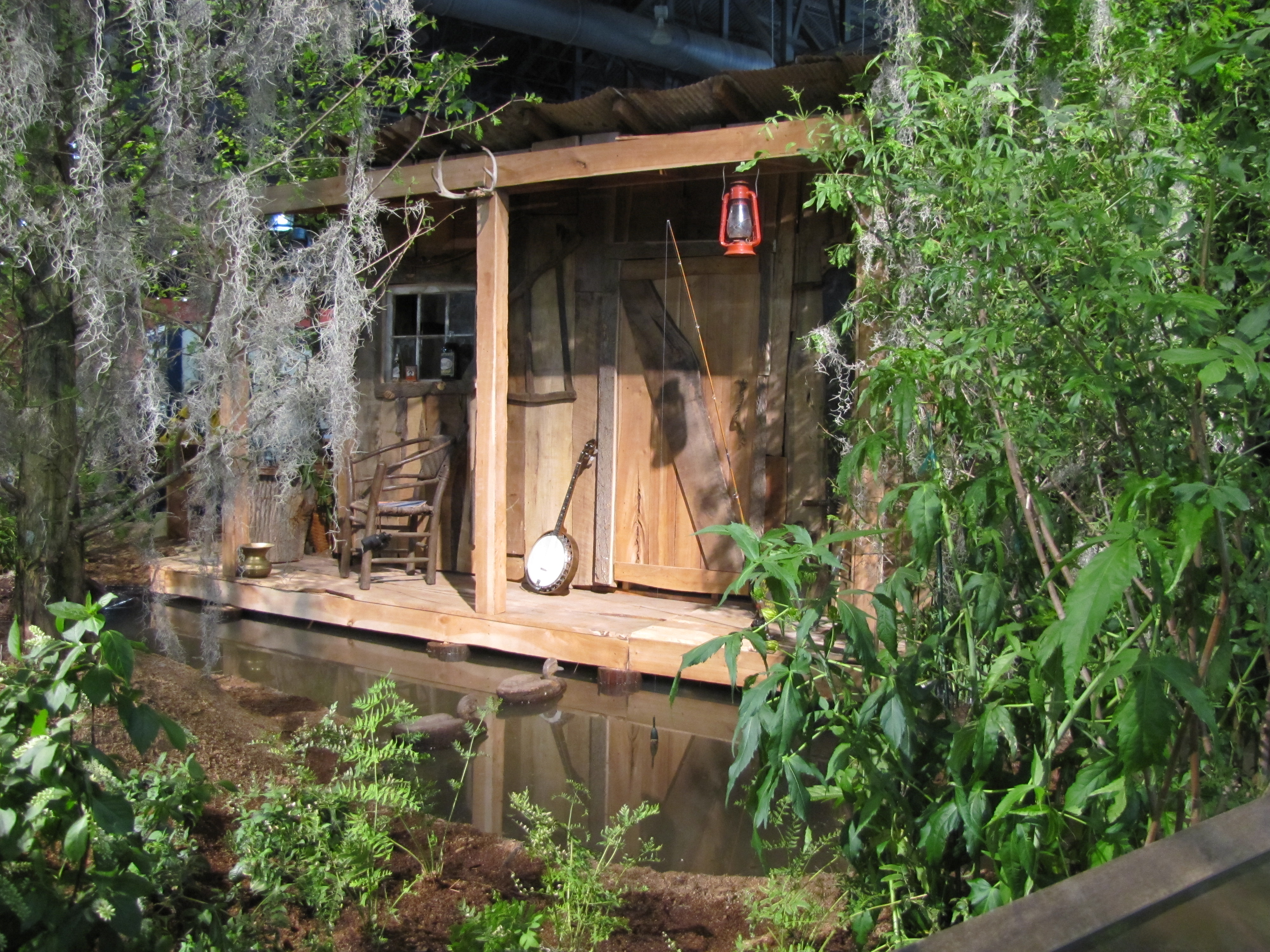
Sixty large scale gardens were featured.  We gazed on a Victorian salon adorned with flowers under glass, a floral decorated Patisserie, a carousel stage, an artist’s studio, a water lily pond and fountains, and an amazing shack inspired by the Louisiana Bayou and built by students. There was a topiary carved into Rodin’s The Thinker and another exhibit inspired by a painting of Edgar Degas.

After a few hours, we left the show and wandered across the street for lunch. The Reading Terminal is a fragrant, busy Marketplace dating from 1892.  It is filled with multiple markets — meats, fish, fresh produce, Philly Cheesesteaks, Amish bakeries, dining counters, and more.  Walking through the Reading Terminal alone would have been worth our trip to Philadelphia, but we had more flowers to see.

On our return, we encountered two polite protesters carrying a large banner.  They were part of a group protesting what they called PNC bank’s “environmental crimes” in Appalachia.  I later learned more about their protest in the Philadelphia Inquirer.

Once back inside, we wandered by prize-winning miniature gardens, then among the one-hundred and eighty unique vendor booths. Wood patio furniture, unique light fixtures, metalwork, a myriad of seeds and bulbs, and quality jewelry. I was attracted to a stall featuring intricate carved porcelain night lights.  The artist was Marty Kubicki from Irvine, California.  I admired his gorgeous artistry then he and I spent several minutes discussing news from Japan and the west coast.

Finally, with feet aching from long hours on concrete, my husband and I left for the parking lot, then drove out of the city.  Late that day, as we settled into our suburban hotel room, we watched broadcasts of the heart-breaking devastation in Japan.

My stories are set in other time periods, before thoughts and pictures could fly around the world in seconds.  On Friday, in the course of a few hours I learned of a horrific earthquake and a possible tsunami, but that my son and the state of California were safe.

What must it have been like for those who lived in earlier times?  How did a woman cope when her husband or sons went off to fight in the Civil War?  Not knowing.  How did 18th century parents manage when their children moved to the new world, not knowing if they would see them again?

Writing historical fiction takes more than just research.  It takes immersing oneself into a different time and culture.  The creators of the gardens at the 2011 Philadelphia Flower Show immersed themselves in the Parisian culture, and were inspired to create awesome scenes. As writers we must do the same.  Doing so brings life to our vision of the world.

My heartfelt thoughts and prayers go out to the families of those lost in Japan.

A Family for your Characters

My mom and dad divorced before my 2nd birthday. Within a few months, Mom moved to another state and remarried.  She’d known my step-dad since their childhood in northern Minnesota.  My older brother and I grew up in a household with Mom, our step-dad, and ultimately five other siblings.  Our younger brother, Tim, died in an accident when he was four and I was eight.   His death forever touched our lives.

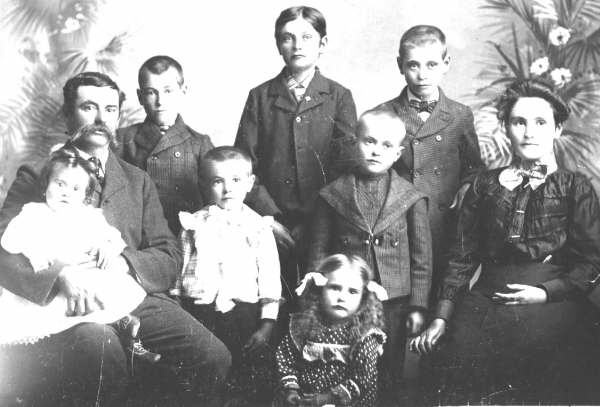
My Great-Grandparents, Godiace & Alphonsine - With their children about 1910

Both my real dad and step-dad were working men who started and ran their own businesses. Through the years Mom tended house, raised her children, baked, read, and sold Avon.   Nearby lived our aunts and uncles and many, many cousins.  We visited a lot.  One of our uncles was an elementary school teacher with a passion for knowledge, a true Renaissance man who, among other pursuits, played guitar, carved Nordic tree sculptures, and boiled down road kill for the skulls.

Who we all became as adults was a direct result of the childhood we lived through together.

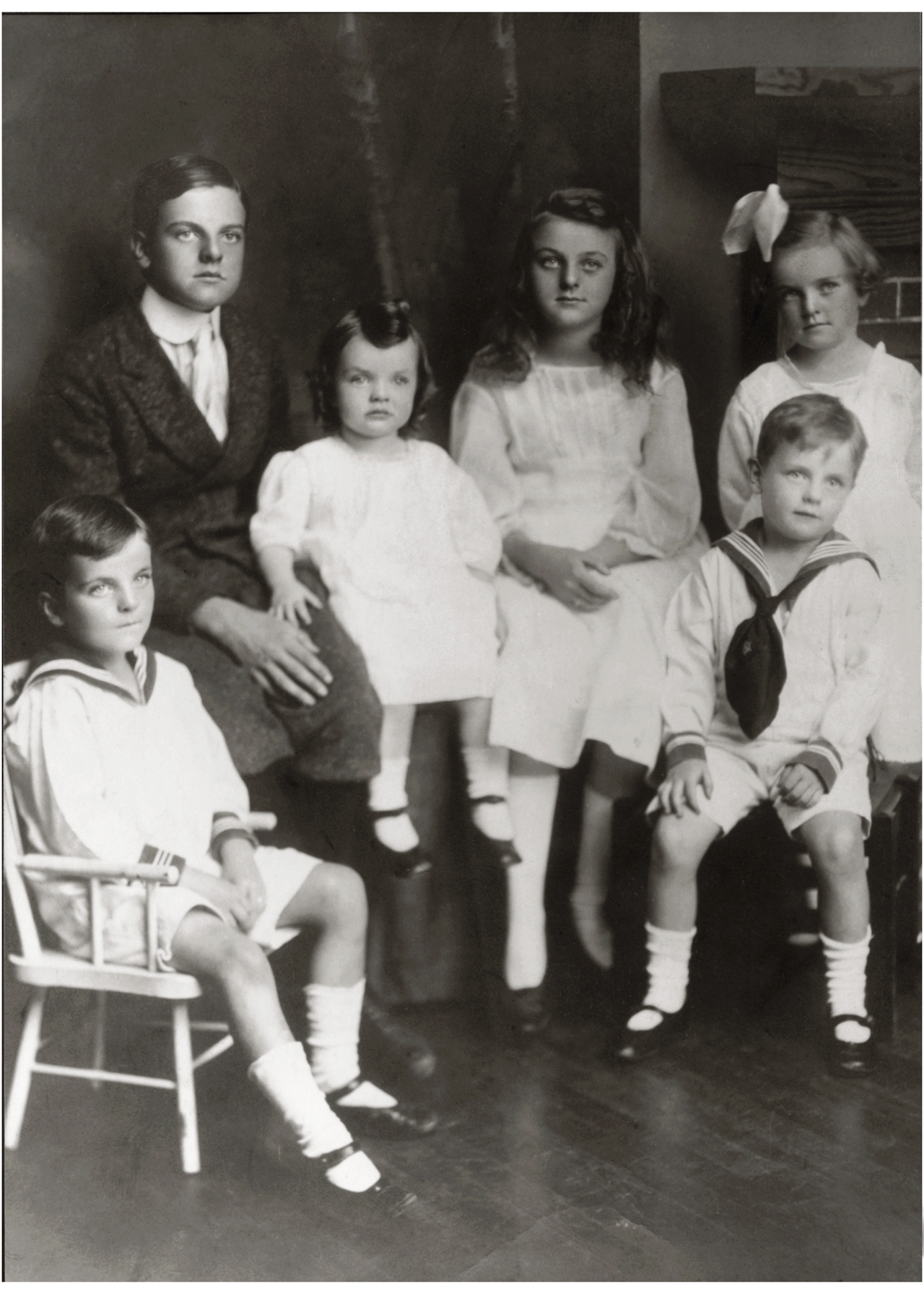
The Maher Siblings, around 1920

George Santayana called the family “one of nature’s masterpieces.”  For all its faults and even dis-functionality at times, I view my family as such.  Somehow, despite familial squabbles, when things matter we band together.  My siblings, my cousins, and I share much more than blood kinship, much more than common strands of DNA.  We share the common bond of memories from growing up together.  And I love them all.

When developing the protagonists for my books, even before I write about them, I must create and come to understand their family lives.  Did they grow up wealthy or poor?  How many siblings?  What was their education?  Where did they live?  Rural, urban, apartment, mansion, log cabin?  What part of the country, and when?  What was their family heritage – Irish or English? American or French?  Norwegian or German?  Did they or their parents fight in a war?  What is their religion?  What was their role in the family – big brother, pacifist, troublemaker, caretaker?  Are their parents still living?  What was their relationship with them?  Who was most important in their lives – a parent, a sibling, a pet, a favored aunt?  Why?

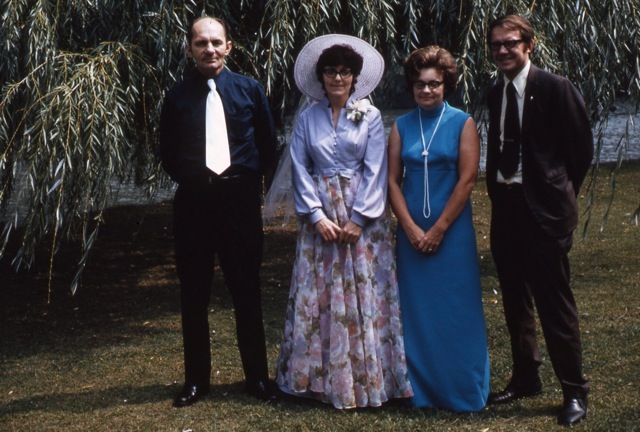
The Ueland Siblings - 1973

I cannot paint my hero’s, my heroine’s, or even my villain’s personality without first developing then understanding their families.  Not every aspect of this information must be written directly into the book; in fact, it’s generally better if it isn’t.  But I need to know it, and I need to understand it.  Their family life is part of their background.  It shapes who my characters are.  Equally as important, it shapes their motivation in the story.  It makes them come alive.

Creating family backgrounds is also essential in creating the book’s core conflict.  But I guess that’s for another blog.   🙂   

Hylda’s Husband

A few days ago I wrote about Hylda Schmeling whose charming photos I’d discovered in a Goodwill store.  I relayed details of her life that I’d found in a quick online search.

The Crimson - 1916

Hylda so intrigued me that yesterday I spent an hour or so researching her husband.  It occurred to me that he’d probably graduated from her high school.  Sure enough that’s where I found him, in the pages of The Crimson, their 1916 high school yearbook.

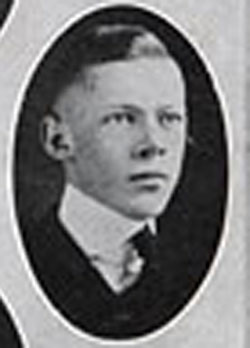
Next to Paul Jenson’s picture, the caption read “A moral, sensible and well-bred man.” It went on to say that he’d entered as a Junior from Park Region Prep School in Minnesota.  In the two years he attended the high school, he was active.  Along with the class play and other activities, he played basketball and was assistant business manager of The Crimson.

The class prophecy jests that he would be President of the Hole-Proof Sock Factory. Another humorous entry jokes about his love of silk socks.  His nickname, like his future wife’s would be, was “Jens”.  His virtue was his good looks, and his favorite expression was “dammit”.   (A more innocent time. :smile:)  He was voted the “greatest doll” and, in a section called “Wouldn’t you like to see”…it reads “Paul Jenson not all dolled up.”  Vivid images.

Paul H. Jenson

Jody Allen, a WisRWA friend, suggested I search for Paul’s military records.  The only listing I found at Ancestry.com was a copy of his draft registration for World War I.   It was signed June 5, 1917, nine days before his marriage to Hylda Schmeling.  So it was a military wedding of sorts.  He was leaving for war; they wanted to marry before he left.  Can you imagine their emotions?

I took another look at census records and found him in the 1900 and 1910 records. His father was from Norway; he’s listed as a Bank Cashier. In 1920, I found Paul and Hylda Jenson living in Edgerton, Wisconsin.  So he did make it home from the war! As his father was, he too was a banker.

After that I can find nothing more of Paul and Hylda.  I’m not sure I want to.

From these raw tidbits of information, I feel I’ve come to know enough about the couple to create outlines.  From there my story will morph into the fun stuff of fiction.  She’s the musically gifted daughter of a well-off German immigrant.  He’s the son of a Norwegian banker who’s just returned from the horrors of fighting in WWI.  As I ponder these two personalities and their backgrounds, a conflict takes root.  A new story begins.

Hylda

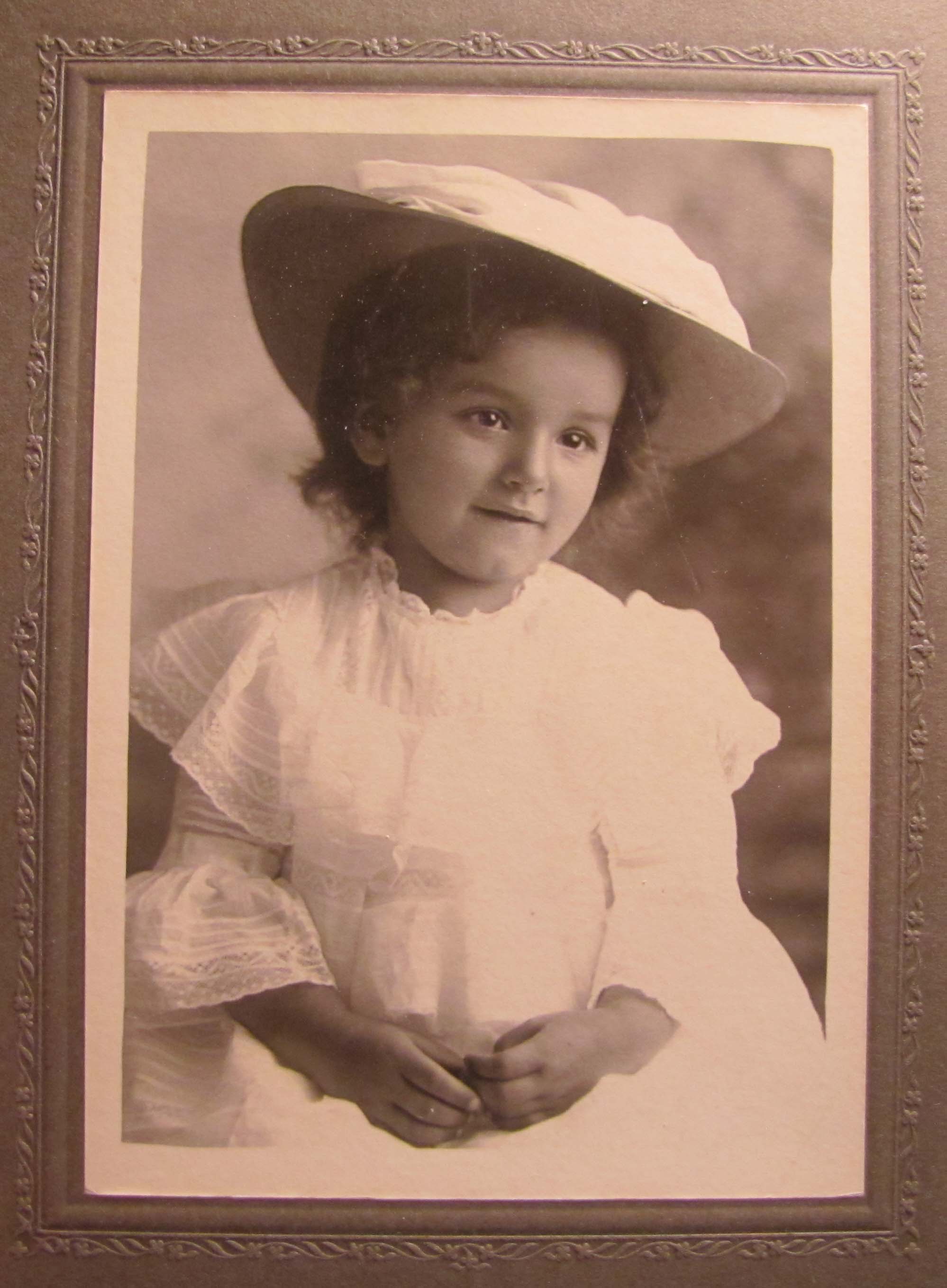
I found her in a thrift store, framed in a shiny metal frame and covered with a sheet of thick glass.  She was young.  Pretty, too.  Garbed in a delicate white dress, she wore a broad bonnet, the type worn early in the twentieth century.  Edwardian, I believe.  Maybe 1905 or 1906.

Hylda Schmeling

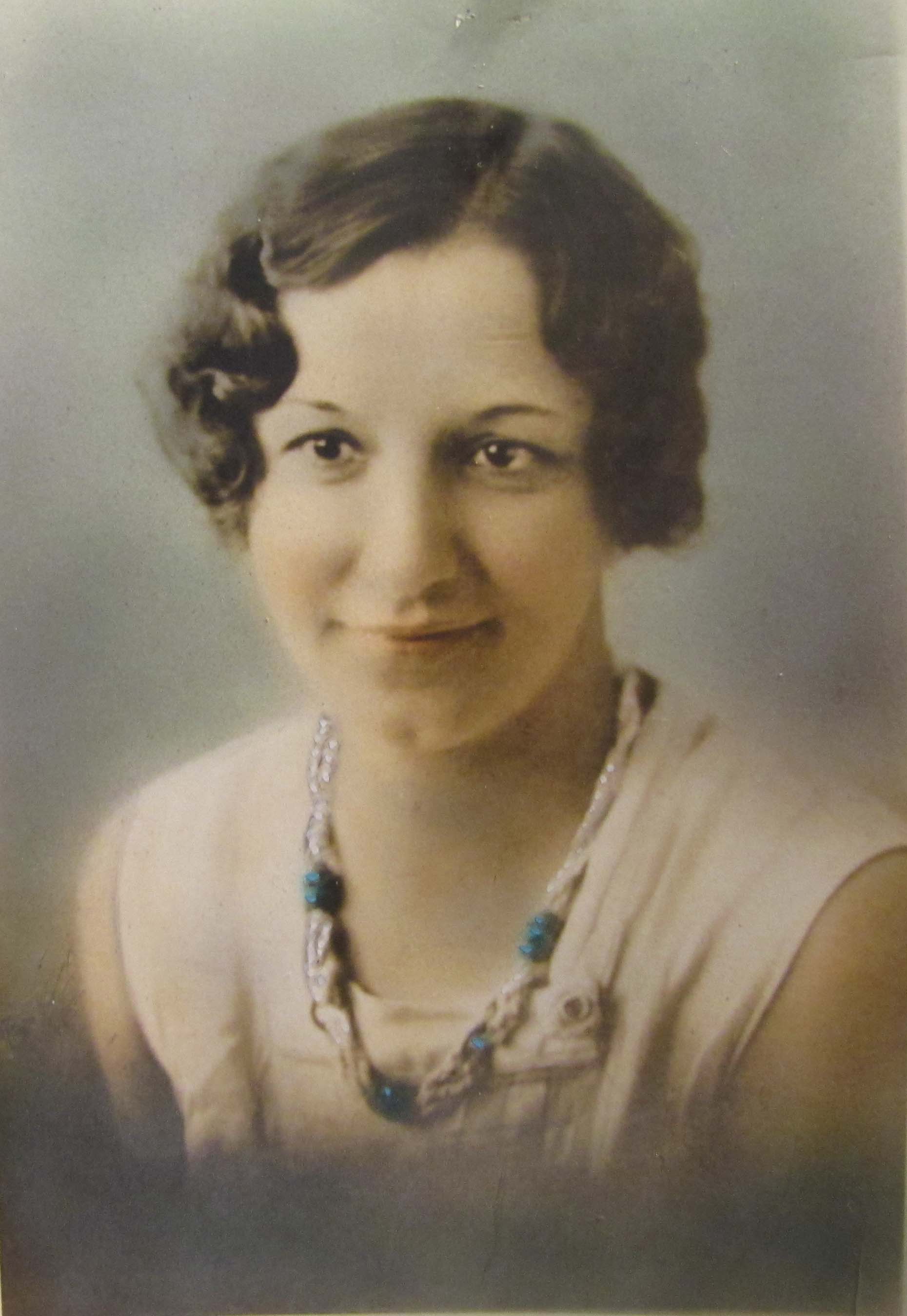
The frame seemed in good condition but a strip of clear tape skimmed the top.  When I turned it over, I found another photo hinged to the back.  This one was in muted colors and portrayed a young woman.  Her short wavy hairdo captured the essence of the 1920’s. The girls sported similar smiles, similar eyes, and each had a partially hidden dimple in her chin, a subtle angel’s touch.  Given the time span of the two pictures, and the similarities, I knew they must be of the same girl.

Who was she?  How did her lovely images come to be on sale at Goodwill?

I lifted the colored photo taped to the frame’s back and was pleased to find writing.  Someone had scrawled the name “Aunt Hylda Schmeling” across the cardboard.  All doubts about buying the photos vanished.  Little chance Hylda’s lost relatives would venture into the GW and see her there.  For $2.99 I was eager to give her a home.

Later I made some online searches for more info about this charming girl. The unusual spelling of her first name, and the city where I found the photos helped. I learned more than I could have hoped.

Hylda Jenson

Born in October 1899, Hylda appears in both the 1900 and 1910 census.  Like her mother, Anna, she was born in Wisconsin.  Her father, Henry, was born in Germany.  One census lists Henry’s occupation as “own income.” So, she wasn’t poor.

In 1916, Hylda Schmeling sang soprano in a chorale at her high school.  In 1917, she married Paul Jenson in Winnebago County, Illinois, just across the state border.  In 1918 a write-up about the Junior-Senior banquet at her Wisconsin high school reads, “Music was furnished by…Hylda Jenson…and several other skilled pianists.”

The questions raced.  Why did she marry in Illinois instead of Wisconsin, where her family lived?  Did her German father object to her marriage to a Swedish Paul Jenson?  Was she happy in her marriage?  Hard to believe otherwise, given her glowing face and sparkling eyes.

Then, in a scanned copy of her 1918 yearbook, I stumbled across yet another entry for Hylda Jenson, nicknamed “Jens”. Her Senior class picture reveals the same sweet smile, the same dimpled chin.  Next to it reads:

“This little lassie is a wife
And sees no more of courting life;
Her hubby’s in France,
Awaiting the chance
To put an end to all this strife.”

So Paul went off to war.  Is that why they married so young?  Did he ever come home to her?  Or did she live out her years as a young war widow?  Sadly, Hylda herself died in 1934 at age 35.  Were there children?  If not, is that why her charming photographs ended up on the dusty shelf of the thrift store?  None left to mourn her now.

Whatever happened in her life, we know that someone once loved her.  She has a story to tell; I hope to tell it.  Maybe my words won’t reveal her true story, but given when she lived, I hope she would find it amusing.

I often find my inspiration in old photos such as Hylda’s.  Where do you find yours? 

Traveling American

“There are always flowers for those who want to see them.” ~ Henri Matisse

Last week we had a sudden death in our family. I needed to travel from Pennsylvania to Wisconsin so I went online to make airline reservations.  Since I had to fly in two days, the fares were close to $1,000; normally it’s a $300+ flight.  Someone mentioned a “bereavement fare.”  I called the airlines, gave the information they needed and was booked on a flight at a closer to normal fare.

Soon after the funeral bad weather thundered across the Midwest.  Massive storms dumped snow and ice.   Shortly before I was to leave for a 2-hour drive to the airport, American Airlines called with news.  My flight was cancelled and I was re-scheduled on a Tuesday flight.  I stayed in my hometown another night.

On Tuesday, the first leg of my trip was delayed.  That delay jeopardized my connecting flight.  The agent at the counter quickly put me on standby for an earlier flight.  Subsequently I was seated on that and made my connection.

Several years ago my husband traveled a lot for his job.  His words of advice came back to me.   “You just go with the flow.”   So during my Tuesday travels I did that.  I also watched other travelers (a favorite activity of writers, I think).  While many sat back with books or laptops, or simply rested, others whined — about everything.  I heard way too many gripes about airlines overbooking, lost luggage, and delayed flights.

It is because of those complaints that I’m writing this post.  Throughout my journey I saw only kind, professional helpfulness.  My sincere thanks to American Airlines and its hardworking employees.  Thank you…

  • to the ticket agent who walked me through the bereavement fare and booked my original flight
  • to management for the call notifying me of the weather related cancellation and rescheduled flight
  • to the agent who offered a standby change so I could connect to my final flight
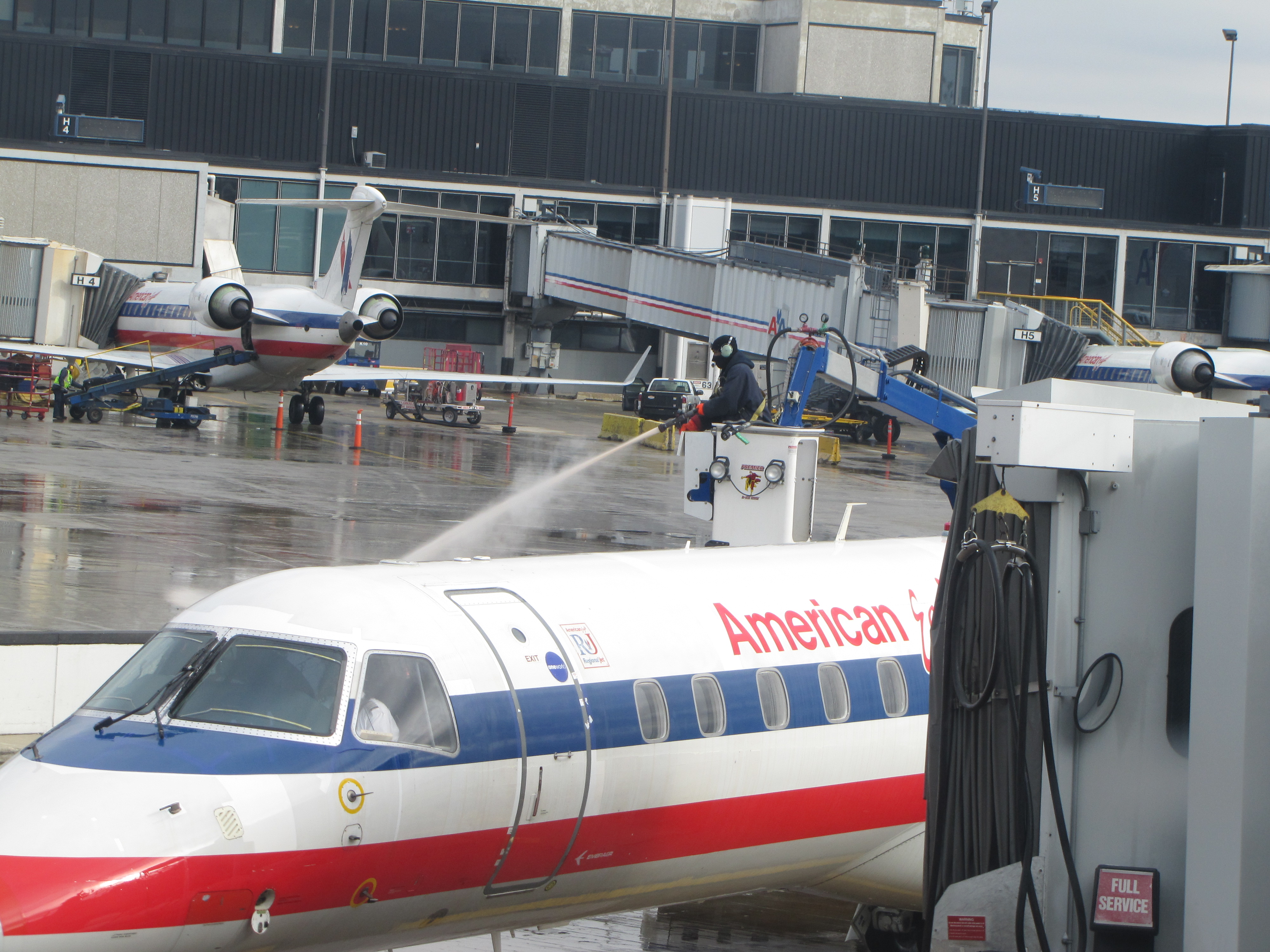
  • to those who de-iced the plane, the mechanics and ground crew who kept things safe
  • to the flight attendants who brought me a sense of security
  • to the pilots who kept the flights on course
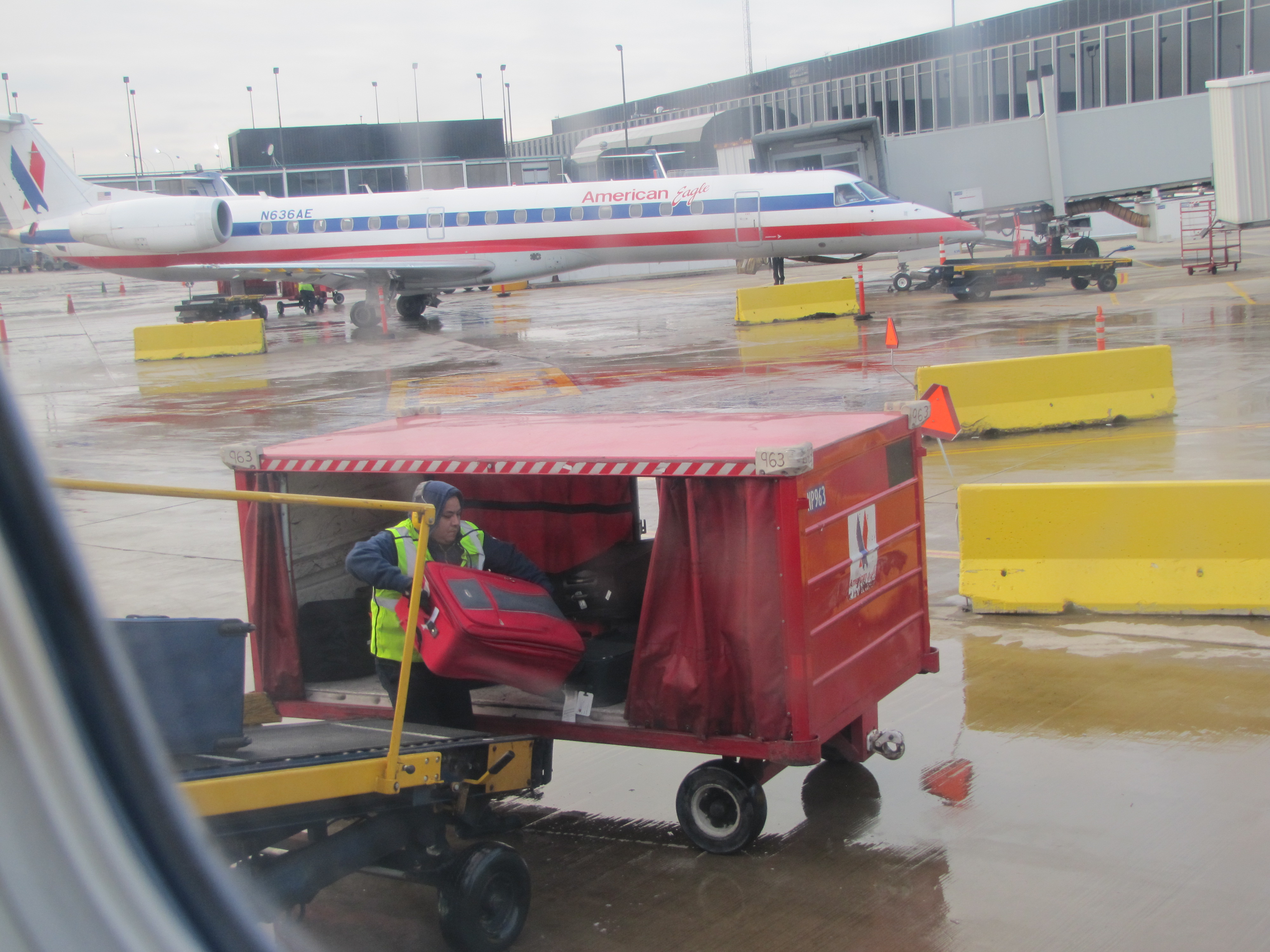
  • and finally, to the baggage handlers who brought my suitcase home safely.

You all made this emotionally draining trip easier.

Some folks seem to believe that the purchase of a ticket in life buys nothing but smooth sailing.  It usually does but sometimes bad things happen beyond control.  When they do just go with the flow and thank the person who guides you through, whoever that may be.

For now I’m saying thank you to American Airlines.

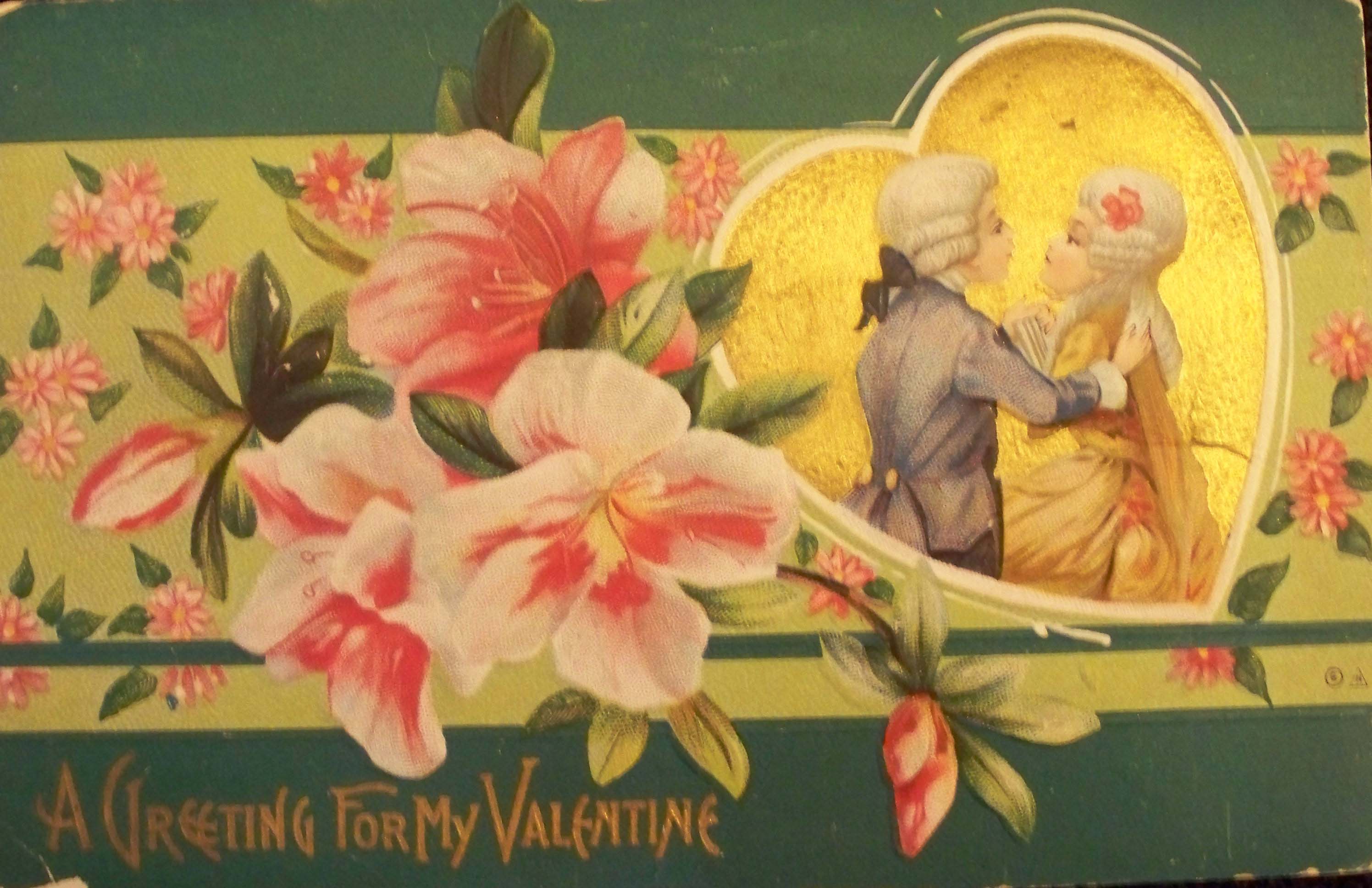
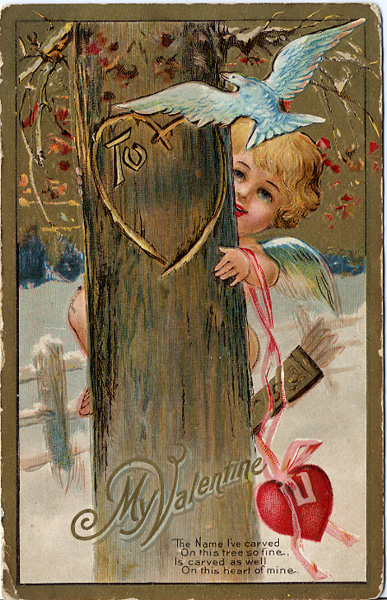
A Writer’s Valentine

My passion is writing romance. I grew up on boy meets girl stories. I watch romantic movies, read romance novels, and write happily ever after stories. For years, I’ve been a member of Romance Writers of America©.  Most of my close friends read and/or write romance.  Finally, and most important, I have been married to my own true hero for well over thirty years.

I should be able to come up with a unique and heartfelt way to say “I love you” on Valentine’s Day.  What can I give him?  And what will he give me?

As I ponder the questions, I don’t imagine that he’ll bring home a bouquet of long-stemmed roses.  That’s okay. I carried white roses on my wedding day. In our years together, he’s brought home roses for birthdays and illnesses, for Valentine’s Day, and sometimes for nothing special.  Nothing special flowers are best of all.  There are times when a soul aches for roses, but not now.

With Valentine’s Day on a Monday, we have no plans for a dinner of prime rib and champagne in a candlelit restaurant.  While the setting is romantic, it is winter, bitter cold, and we’ll both be tired from work.  I’m thinking crock-pot soup, sandwiches, and a Netflix movie.  Sounds nice, doesn’t it?

We’re beyond buying silly ties and heart-patterned socks and pj’s. There was a time for that, true.  But no more.  Chocolate truffles and bon-bons are out, too.  I’ve managed to lose over fifty pounds this past year.  I feel better than I have in decades.  I’d like to keep it off for me, and for him.

So what will I give him for Valentine’s Day?  I believe I’ll tell him –

~ for all the compliments you’ve given me, deserved or not, boosting my fragile ego

~ for the three sons we created and raised together

~ for trudging off to work in frigid pre-dawn hours, day after day, year after year

~ for the thousands of conversations we’ve had and will keep having until we can no longer talk

~ for the many many adventures we’ve shared

~ for championing the good causes and being my hero

Yes, quite simply I’ll say…for all that and more, I love you

Birth and Death

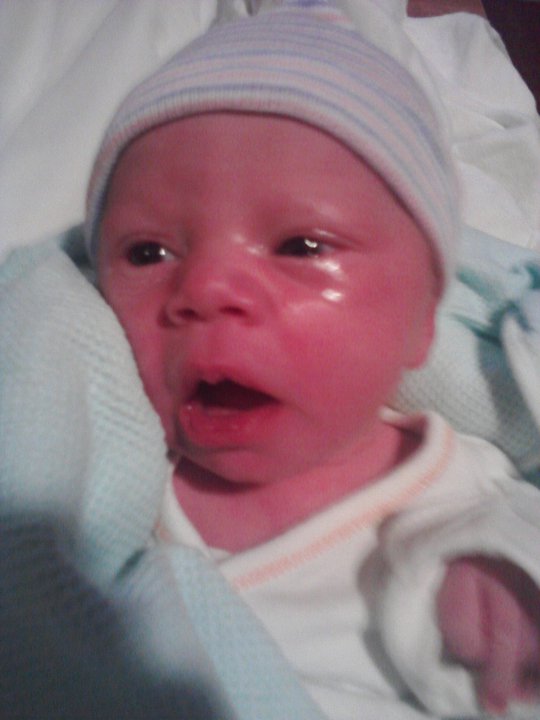
Last week massive storms ripped a 2,000-mile swath across the land. On Tuesday at 1:32 am, in the middle of the heavy Wisconsin blizzard, a text message appeared on my cell. It was from my brother. “At the hospital,” his words read. I didn’t actually see the message until I woke around 5:30. By then more messages revealed that, a few hours earlier, my niece had given birth to her second daughter.

Out of the snowy dark came the glorious wonder of life.

A few days later, I received another sort of message from a dear friend, also in Wisconsin.  “My son died yesterday afternoon,” she wrote in part. “I was with him and sent him on his way.”

Out of the snowy dark came the terrible wonder of death.

I understand the joy my niece feels. After all, I’m a mother with three children of my own.  Only a newborn baby can bring such a glad fullness to the heart.  The memories of those early hours never leave.

When I learned of the birth, I wanted to hug my niece and her new daughter. But hugs will have to wait until my visit in May. My grand-niece will no longer be a newborn then, but I will hold her and welcome her into my life.

It seems to be a time of new babies in our family.  A happy time. Sadly, it’s also a time of passing. In the last few years alone, we have lost four loved ones.

Through those losses, and others, I understand a little of what my friend feels. And, just as I wanted to hold my newborn grand-niece on learning of her arrival, I wanted to hug my friend in comfort at her loss.

Life and death touches us all at the most basic level.  They are shared experiences.  Sometimes I am awed to see the depth of caring generated by others when babies are born, or when people pass from this life.  To me those feelings reveal the inherent goodness in humanity.

As a writer, it is something I hope I re-create in my stories.

Welcome, Avaeh Nicole!  Rest in peace and love, Jimbo.  ∞

Winter Muse

I’ve always been fascinated by winter. I’m not sure why.  Maybe because I was born during the month of January.  It could be because my parents were from northern Minnesota or that their ancestors all hailed from northern Europe.  From my Wisconsin childhood, I recall snowbound winters and a few temperatures of 30 below, not wind chill. Whatever the reason for my fascination, even though I most enjoy the crisp, colorful months of autumn, I feel most at home in winter.

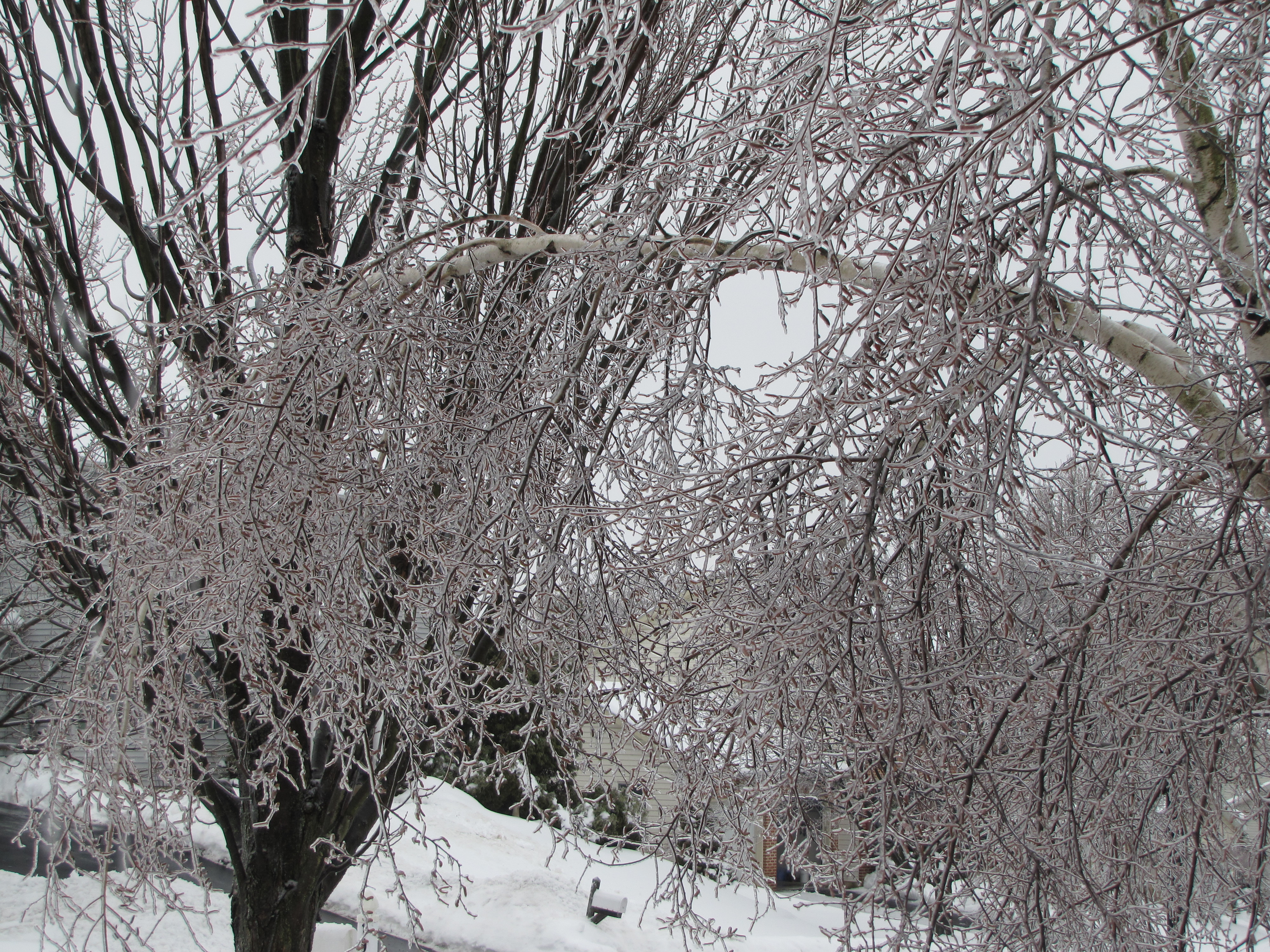
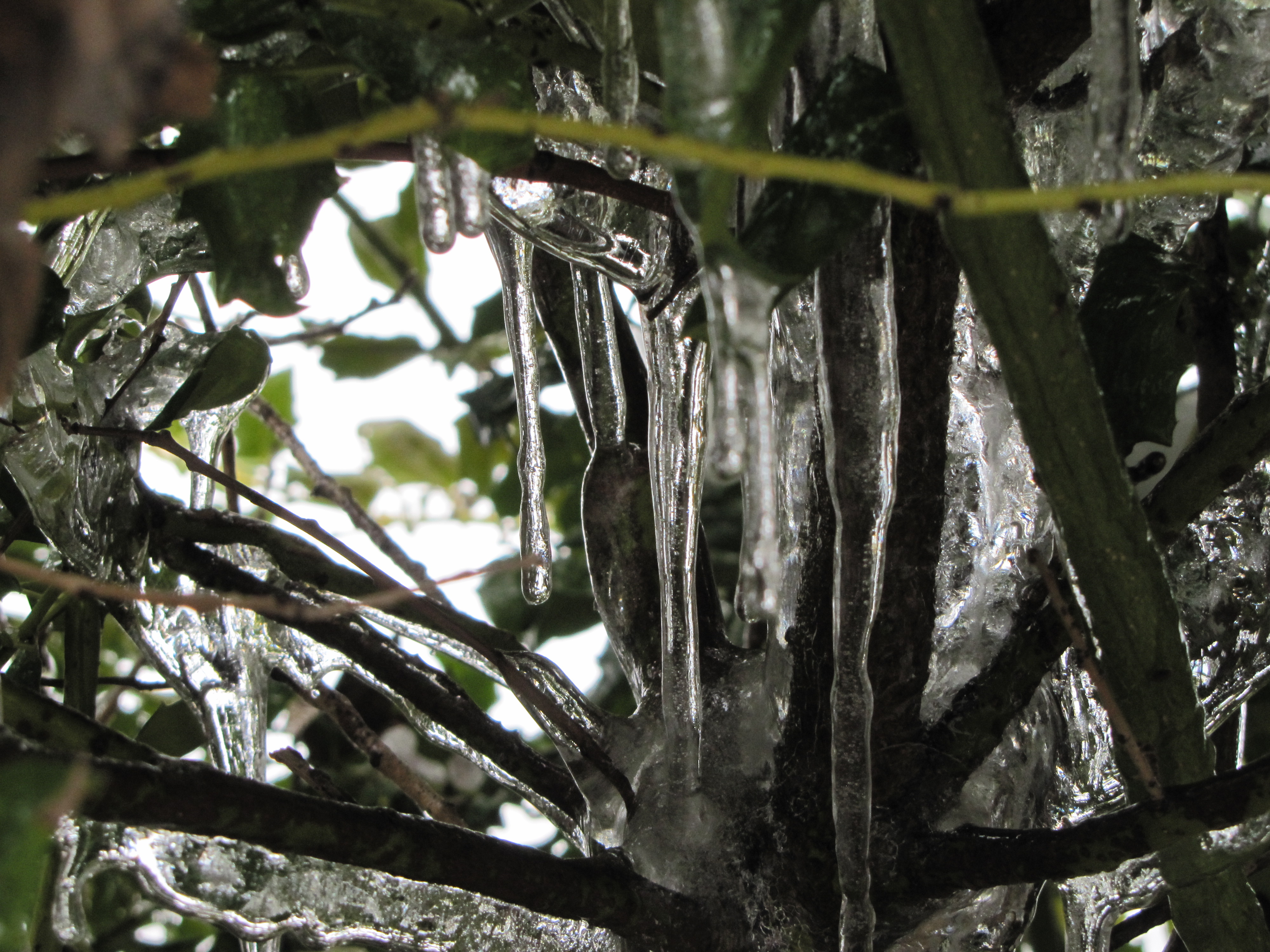
This year I should be ecstatic.  Winter has walloped the land with blast after blast of vicious storms.  The wicked weather has caused schools and highways to close. On ice-coated highways cars crash, and trucks jackknife.  Downed power lines send tens of thousands into the black, cold night of an earlier time.  Not good, but I never said that I liked winter, simply that it fascinates me.

I grew up hearing stories about the deep snows and blizzards of Minnesota.  My grandparents and great-grandparents were farmers. In their youth on the northern plains, they had no central heat. Indoor plumbing consisted of a kitchen sink with running water. As a child, my mother attended a one-room schoolhouse where they warmed wet mittens and cold lunches on the wood burning stove. Imagine the smells created by that steamy mixture.

Maybe its because of these true stories that many of my own fictional tales are mainly set during the winter months.  To me, the season signifies a time of change, and of conflict.  In historical works especially, life is a continual struggle. While the primary trouble in my stories is always between people, winter provides a great background.  It adds conflict to an already conflicted tale.

Weather of any kind helps to set a mood in stories.  It adds to the realism.  It can be the gentle touch of a spring rain, the glaring heat of July’s sun, or the whipping winds of winter.  Generally, winter works best for me.

Writers, think of your own stories.  Do you have a recurring season that inspires your work?  Please share. 

Secrets

In writing a novel, there are many ways to enrich the characters.  Some writers fill notebooks with complete details.  They include every aspect:  height, weight, hair and eye color, college attended, hobbies, astrology sign, mother’s maiden name, father’s occupation.  The writer plans carefully and leaves nothing to chance.  All this detail, whether or not it is eventually spelled out in the book, helps to make the character real, both to the writer, and subsequently to the reader.

A few years back at a conference workshop, I heard a statement about character development that I found far more helpful than creating long lists of detail.  “Give your hero a secret,” the speaker said.  “What does he not want anyone to know?”  A secret adds rich layers to a novel.

On Sunday my husband and I took a bus into New York City to meet up with our oldest son.  We enjoyed the day, walking around together, stopping into shops and cafés, seeing the sites.  As we paused for several minutes to look out over a snow-covered Central Park, a thought occurred to me.  Cities, like characters in a novel, have secrets.  These secrets can be anywhere.

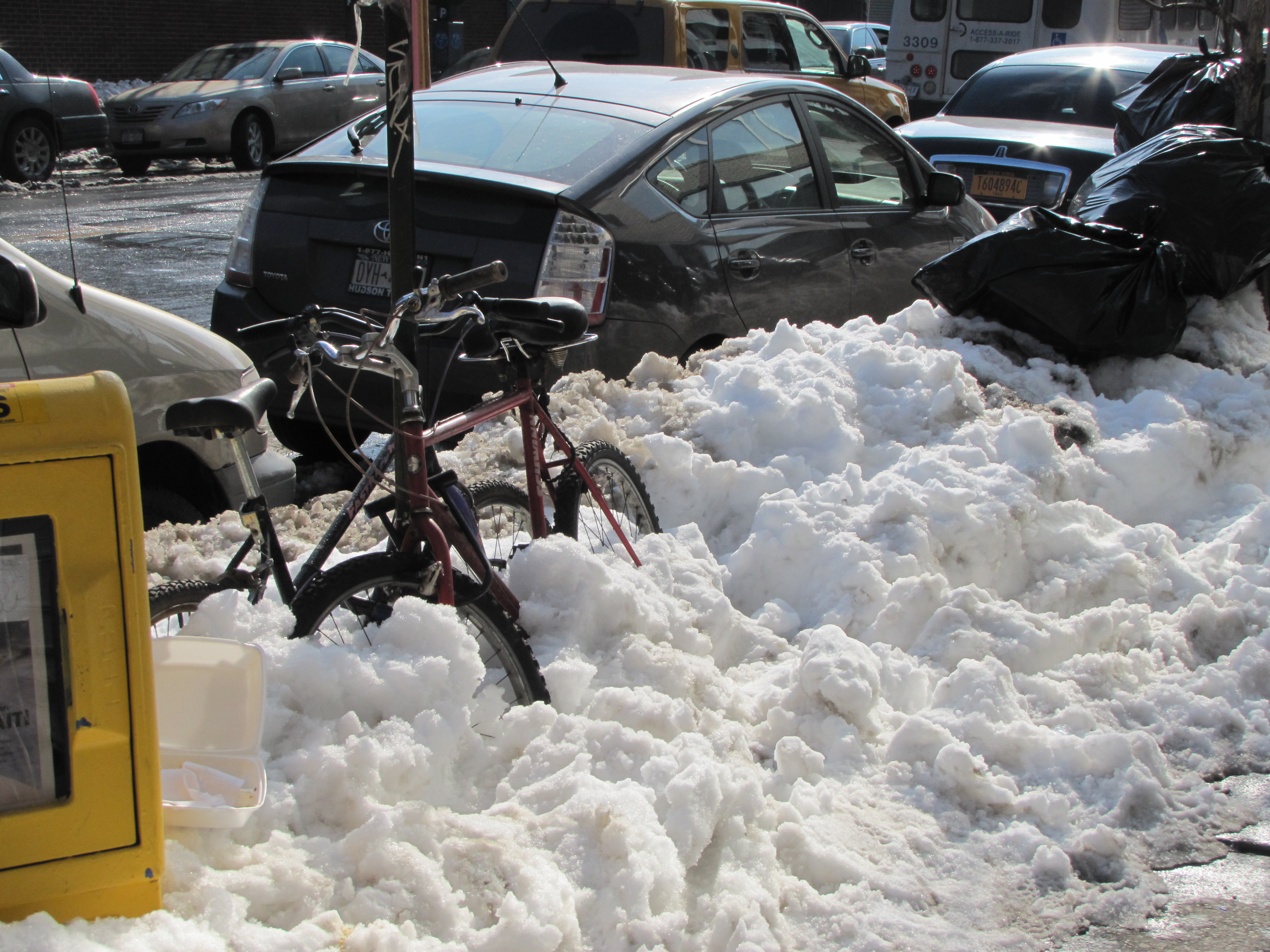
Who sleeps in a snow-covered maintenance shed in Central Park?  What lies buried under mounds of uncollected garbage?  What crime was just committed backstage of a Broadway play, or in the halls of justice? Essential to the plot, these are all secrets in setting.  They are simply waiting to be revealed.

On our ride home, I mused over the term “setting secrets.” I realized that I had several ingrained in my own stories.  A construction site hides a murder victim.  A farmhouse conceals a kidnapped child.  A small town denies its guilt over an injustice.  In each of these stories, I believe my description of the setting became deeper, and darker, because the setting hid a secret.

I’ve heard it said that thinking of your setting as a character will add richness to your story.  Take it a step beyond that.  As you do for your characters, give your setting a secret, too.  See what happens. 

The Will to Write

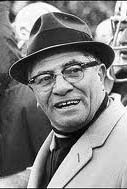
The difference between a successful person and others is not a lack of strength, not a lack of knowledge, but rather a lack of will. — Vince Lombardi

Legendary Green Bay Packers’ Coach Vince Lombardi understood success and he understood what it took to achieve it.  It takes willpower to coach a team to the SuperBowl and win – twice.  Willpower, and always keeping an eye on the ultimate goal.

It also takes willpower to write and publish a book then another, and another.  Raw, butt-breaking, stick-to-it willpower.   Best-selling author Madeline Hunter once said that she had never seen a writer who persevered not eventually publish. Since then, I have observed others and seen first-hand the truth of her words.  Writers who persevere do eventually publish.

When I think on my experiences in writing my first book, I’m awed that I ever finished it. It was a daunting job, even with the assistance of a decent critique group.  My second book came easier.  My third, written in only eight months, seemed even simpler, although the middle is still mush.  Perhaps if I had pushed myself harder to polish and actually sell those early efforts, I would have had more success with those that followed.  But, somewhere along the way I let life intrude.  Again, again and yet again. 😦

About a year ago I received a medical wake-up call.  It made me examine my life and where I was headed.  I started eating healthier. Over the next several months, I lost a whole lot of weight, and gained a whole new wardrobe. 😀   My husband and I had long talked about a dream trip.  In October we flew to Paris.  But where is my writing in all of this?  It can’t just sit idle.

I’ve had this innate need to write for too long to let it just fade into oblivion.  I won’t allow my obituary to say “An amateur writer, she wrote several novels that were never published.”  I ache to churn out characters and stories that will not just lie buried in some computer file, but will be read and enjoyed by many.

So I’m writing again, daily.  My newly created characters are talking to me.  They’re taking actions that reveal who they are.  They’re getting into trouble.  Forcing me to plot just how I’m going to get them to the point where they finally declare their love.  Just now I’d be thrilled if they’d even talk to each other in a civil manner.  Regardless of the grief they cause, I am writing about their lives and will continue until their story is told.

I will finish this book.   Writers who persevere do eventually publish.


Mothers & Daughters

I’m thinking of her today. Her gentle voice and proud image linger about me.

The relationship between a mother and her daughter can follow many paths.  A childhood friend was incredibly close to her mom. The two of them talked, laughed and shared silly secrets. Yet another good friend and her mother were like strangers; they barely spoke. At various times I have envied both. Why?

She was generous in her legacies. I cannot fault her for that.

From her I learned the value of family. She was an at-home wife and mother with a large family. At a time when bottle-feeding was rampant in America, she breastfed her babies. When store-bought Wonder Bread became the national favorite, she kneaded and baked wholesome homemade bread and cinnamon buns filling our home with an awesome aroma. Our childhood meals always saw us seated together around the table. As a young mother through the 1950s and 1960s, she regularly used her Kodak, snapping pictures of all those she loved and recording our history for posterity.  Throughout her life, she treasured family and family gatherings.

She also loved to read. Another cherished legacy, one that led to my writing. From my earliest days, I saw scores of books on the shelves of our living room – REBECCA, WUTHERING HEIGHTS, JANE EYRE, and a magnificent edition of the complete works of William Shakespeare. In junior high, I brought home Victoria Holt’s MISTRESS OF MELLYN from the school library; that started our shared immersion into gothic romance and then romantic suspense. How she loved those books – a rambling cliff side mansion, a dark, brooding hero, a heroine in danger.  Sometimes, I think she saw herself in the role.

From her I learned dignity, self-esteem and stubbornness.  She took great pride in her appearance. Each morning, and whenever she left the house, she would preen in front the mirror, freshening her make-up and hair. For nearly four decades she sold Avon cosmetics. It brought in some cash, but it also brought luxury into her life. In her last years, after we all convinced her she was too ill to continue with it, she secretly signed up again and struggled to sell for another year.

Still, there were aspects of her character that I rejected. Parts of her were a puzzle I could not solve, a riddle I never understood. Sometimes, I think I will spend my remaining years trying to understand her, and our relationship. Penance.

It’s now been 3½ years since she left us. Today, she would have been 83.

Happy birthday, Mom. I love you.  ∞


A New Year

It’s Sunday, January 9th, and my house is still decorated for Christmas.   I got a late start.  When I finally got around to decorating, I scattered seasonal décor with a light hand.  Instead of a 6-foot tree, I set up a table tree in our bay window.  Elsewhere our Christmas stockings, my Jim Shore Santas, two red poinsettias, and a bunch of candles spread holiday cheer in our home.  With the sparkle of the tree lights and glow of the candles, it was enough.

Now, even though Christmas is more than two weeks gone, I’m not ready to put it all away.  Call it the afterglow.  I’ve always loved reading through holiday cards and letters after the holiday.  Just as precious are the late arrivals that season our mailbox between Christmas and the New Year.  I take time to enjoy my new gifts, especially the books and CDs, bath and body products, and assorted kitchen gadgets. I love wearing my Santa socks, and posting new pictures of babies and toddlers on our refrigerator.

Still, there is a time to put it all away and bring in the New Year.  Just not yet.

In the spirit of welcoming 2011 though, as I hung my new calendar I made a few resolutions.  Mostly they pertain to health and writing.  I WILL continue to eat healthy and to lose a few more pounds. I WILL finish my latest book by April 1st.  And I WILL blog weekly.

This last resolution caught me by surprise.  It came in response to a challenge posted on WordPress.com, challenging us to increase our blogging time.  WP suggested we blog daily, or weekly.  I knew I’d never make the daily gig.  It’s enough for me to scribble a few more paragraphs on my book each day.  But a weekly blog?  Still, I have a good friend who’s been doing just that since she set up her blog in 2008 and she’s now published.  It’s about putting commitment and scheduling into one’s mindset.  A good idea.

So, dear reader, watch for a new blog each week.  Come summer, watch for an even healthier me.  And finally this spring, watch for word of a finished book.  My resolutions are lofty ones so could you please send a few positive thoughts my way?  I’ll hold your hand, if you hold mine.

Now, if I hang some hearts from the branches of my small tree, do you think I can keep it up until Valentine’s Day?